

Amazon Tops the Fortune 500, Signaling a New Era of Corporate Power
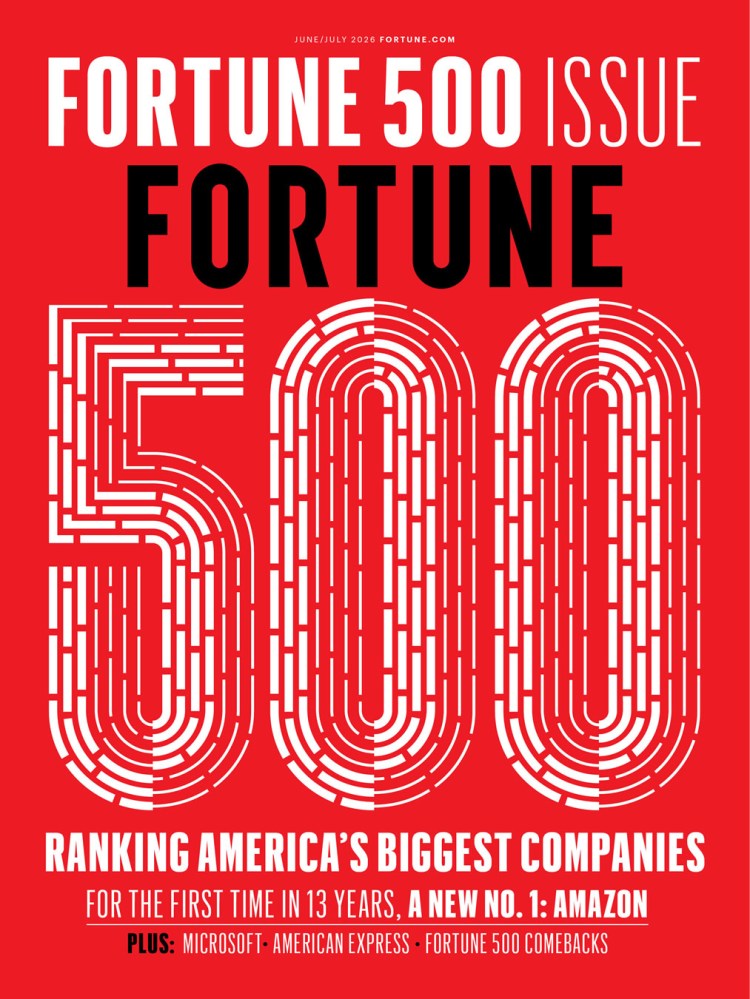
For more than a decade, the summit of American business belonged to Walmart. The retail giant’s dominance atop the Fortune 500 became so familiar that it seemed almost permanent. But the 2026 edition of Fortune’s iconic ranking tells a different story—one that reflects how profoundly the architecture of the global economy has changed.
This year, Amazon has claimed the No. 1 position on the Fortune 500, ending Walmart’s 13-year reign and becoming America’s largest company by revenue. The milestone is more than a reshuffling of rankings. It marks the culmination of one of the most remarkable corporate ascents in modern business history.
Amazon generated more than $700 billion in revenue during fiscal 2025, posting 12% year-over-year growth and securing the top spot on Fortune’s 72nd annual list of America’s largest corporations. The achievement is particularly striking, given that just over two decades ago, the company ranked near the bottom at No. 492.
Its rise mirrors the transformation of commerce itself. What began as an online bookstore evolved into a sprawling ecosystem encompassing e-commerce, cloud computing, logistics, artificial intelligence, entertainment, advertising, and enterprise technology. Amazon’s elevation to the pinnacle of the Fortune 500 underscores how digital infrastructure has become as economically powerful as traditional retail.
A New Corporate Hierarchy
While Amazon now leads the pack, Walmart remains a formidable force at No. 2, followed by UnitedHealth Group at No. 3. Apple and Alphabet round out the top five, creating a leaderboard that reflects the growing influence of technology and data-driven business models across the American economy.
The top ten companies on the 2026 Fortune 500 collectively generated an astonishing $4.5 trillion in revenue. Each company produced more than $320 billion in annual sales, illustrating the extraordinary scale at which today’s corporate giants operate.
Among them, Alphabet continues to redefine profitability. Google’s parent company retained its title as the most profitable Fortune 500 company, surpassing the $100 billion profit threshold for the second consecutive year. Its $132 billion earnings figure established a new record for any company in Fortune 500 history.
The Economy Behind the Ranking
The Fortune 500 remains one of the most revealing snapshots of American economic power.
Collectively, the companies on this year’s list generated $21 trillion in revenue—equivalent to roughly two-thirds of U.S. GDP. Their profits climbed 12% to $2.1 trillion, while their combined market value surged 19% to an extraordinary $55 trillion.
These companies also employ 30.5 million people worldwide, highlighting their role not only as economic engines but also as major drivers of employment, innovation, and investment.
The threshold for joining the Fortune 500 has never been higher. A company needed at least $7.5 billion in annual revenue to earn a place on the 2026 list, reflecting the increasing concentration of economic power among large enterprises.
The AI Era Creates New Winners

Perhaps no company better captures the technological momentum reshaping the corporate landscape than Nvidia.
Ranked No. 16 by revenue, Nvidia achieved a milestone that extends beyond the Fortune 500: it became the first Fortune 500 company to surpass a $4 trillion market cap. In doing so, it overtook Apple as the world’s most valuable company.
The achievement is a testament to the explosive demand for artificial intelligence infrastructure. Less than a decade ago, Nvidia debuted on the Fortune 500 at No. 387. Today, it sits at the center of the global AI revolution.
The company’s trajectory illustrates how market value and strategic importance increasingly depend on technological leadership rather than sheer revenue scale alone.
Financial Services and Healthcare Flex Their Muscle
Sector-wise, financial services emerged as the largest presence on the list, with 95 companies represented. Together, these firms generated $4.1 trillion in revenue and earned more than $474 billion in profits.
Healthcare remained another dominant force, generating $3.6 trillion in combined revenue and placing eight companies among the top 25. The continued strength of health insurers, pharmaceutical firms, and healthcare service providers underscores the sector’s growing importance in the American economy.
Fresh Faces and Fast Movers
Every Fortune 500 ranking highlights not only established titans but also rising contenders.
Twelve companies debuted on the list in 2026, reflecting the constant evolution of corporate America. Among the notable newcomers are Galaxy Digital, Medline, Amentum Holdings, Venture Global, and Arista Networks.
Meanwhile, online automotive retailer Carvana posted the year’s most dramatic climb, leaping 94 positions after recording 49% revenue growth. Such rapid movement serves as a reminder that even within an economy dominated by giants, disruption remains possible.
Progress at the Top—But Slowly
The 2026 Fortune 500 also reveals incremental gains in corporate leadership diversity.
Fifty-five companies on the list are now led by women, representing 11% of all Fortune 500 firms. While still a modest share, it marks continued progress compared with previous decades when female CEOs were a rarity among America’s largest corporations.
Among the most prominent women leading Fortune 500 companies are Jane Fraser of Citigroup, Mary Barra of General Motors, Carol Tomé of UPS, Tricia Griffith of Progressive, and Gail Boudreaux of Elevance Health—the highest-ranked Fortune 500 companies led by a woman.
The figures suggest that while representation is improving, the executive ranks of America’s largest corporations remain a work in progress.
Geography of Corporate America

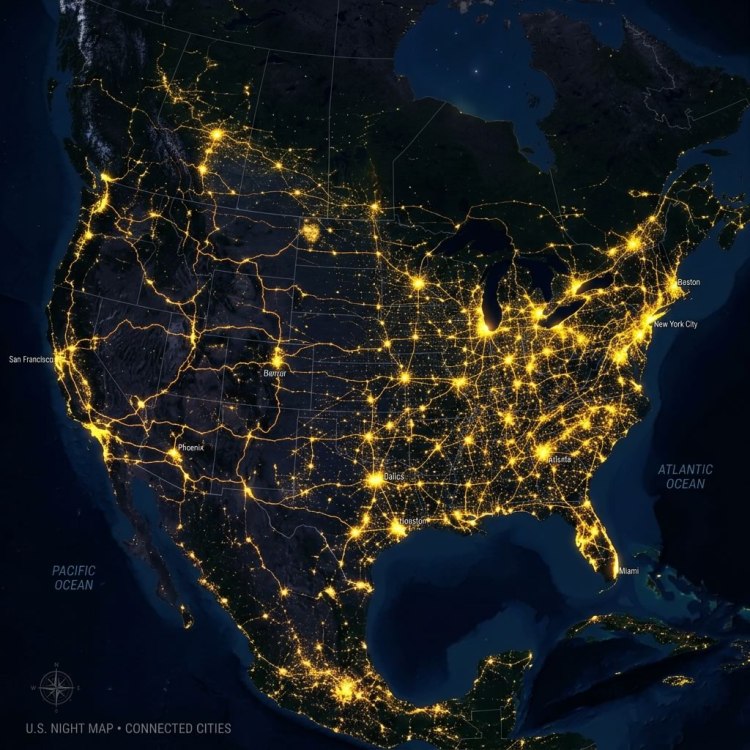
The Fortune 500 is increasingly dispersed across the country, with companies headquartered in 229 cities spanning 39 states.
Texas leads the nation with 57 Fortune 500 headquarters and $2.8 trillion in combined revenue. California follows closely with 56 companies but dominates in profitability, market value, and employment. Its Fortune 500 firms collectively generated $647 billion in profits and boast a staggering $20 trillion in market capitalization.
At the city level, New York remains the undisputed corporate capital of America, hosting 43 Fortune 500 headquarters. Houston, Chicago, Atlanta, and Dallas complete the top five.
The Currency of Trust
Beyond the numbers, Fortune’s 2026 ranking highlights a deeper theme shaping modern business success: trust.
As Fortune Executive Editor Matt Heimer observed, only four companies have ever held the No. 1 position in the list’s 72-year history. Reaching that level requires more than operational excellence or financial performance. It demands the confidence of customers, investors, employees, and partners at an unprecedented scale.
Amazon’s rise to the top is therefore about more than revenue. It reflects the evolution of consumer behavior, technological infrastructure, and corporate influence in the digital age.
The 2026 Fortune 500 is ultimately a portrait of an economy being reshaped by technology, artificial intelligence, healthcare, and data. The companies that dominate today are not merely the largest—they are the organizations that have successfully embedded themselves into the daily lives of millions.
And as Amazon’s historic ascent demonstrates, the next era of corporate leadership will belong not only to those who grow bigger but also to those who continue to earn the trust that makes such growth possible.
 Surender Hastir