
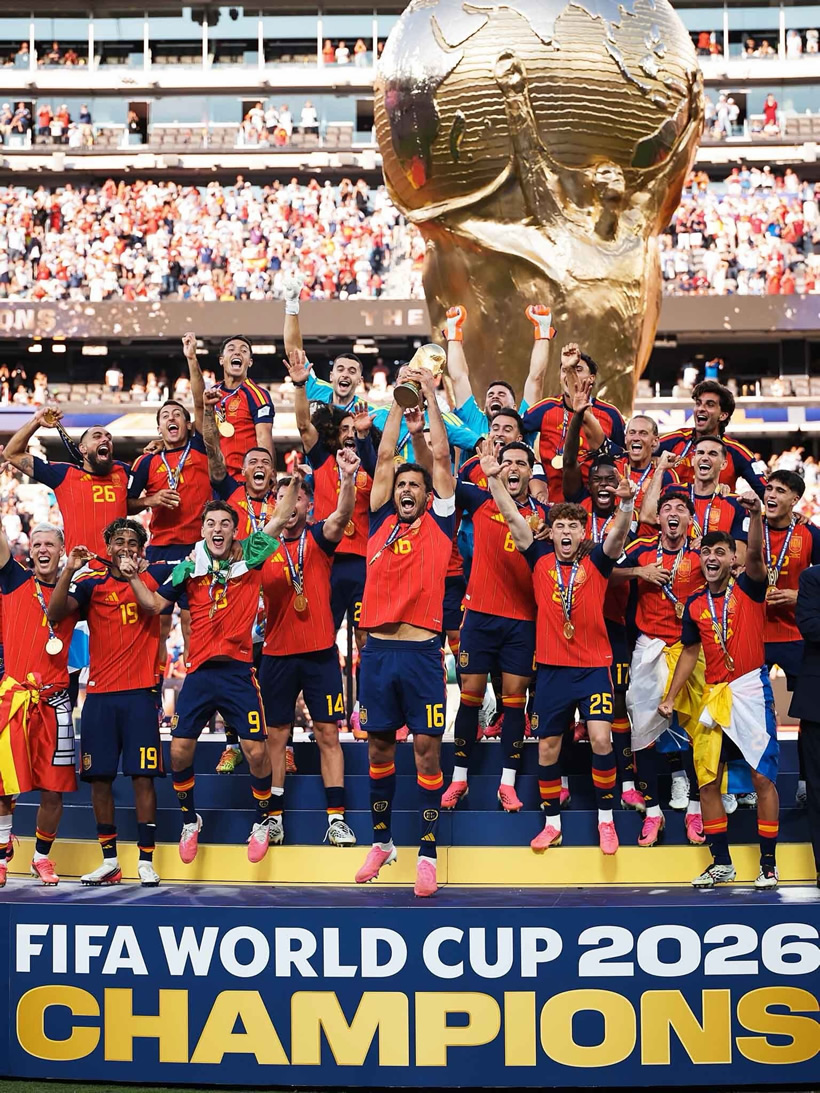
The Night Spain Rose Again
How a patient masterpiece in New Jersey crowned a new world champion and brought Lionel Messi’s extraordinary World Cup journey to its poignant conclusion.
Some football matches are decided by moments.
Others are decided by ideas.
The 2026 FIFA World Cup final was won by an idea that refused to surrender.
For more than 100 minutes inside New York New Jersey Stadium, Spain controlled the ball, dictated the tempo, stretched the field, and patiently searched for the opening that Argentina fought desperately to deny them. It was football played with conviction rather than urgency—a team trusting that if they remained faithful to their identity, the decisive moment would eventually arrive.
When it finally did, it carried the weight of history.
In the 106th minute, Ferran Torres found the breakthrough that Spain had pursued all evening. One finish. One goal. One nation reborn as world champions.
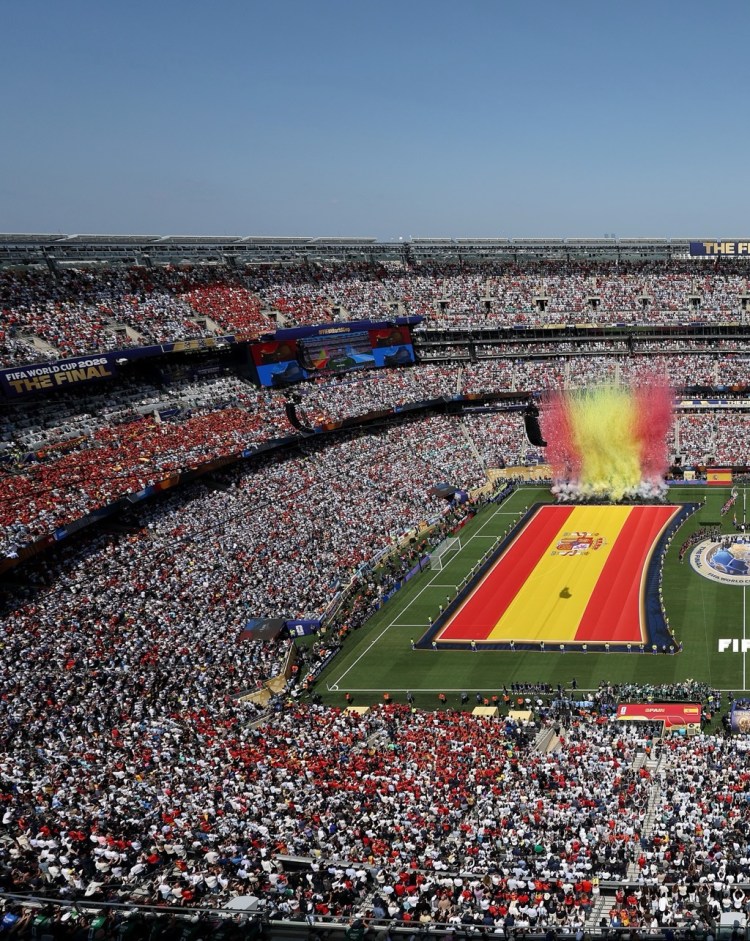
By the time the final whistle echoed around MetLife Stadium, Spain had reclaimed the FIFA World Cup for the first time since their historic triumph in South Africa in 2010. Sixteen years after redefining modern football through possession and precision, La Roja had climbed back to the summit of the sport—not by recreating the past, but by reinventing it.
Across the field stood Argentina, the defending champions whose remarkable reign had come to an end. For Lionel Messi, now 39, it was almost certainly the final page of a World Cup story that has captivated football for two decades.
It was a night of endings.
And of beginnings.
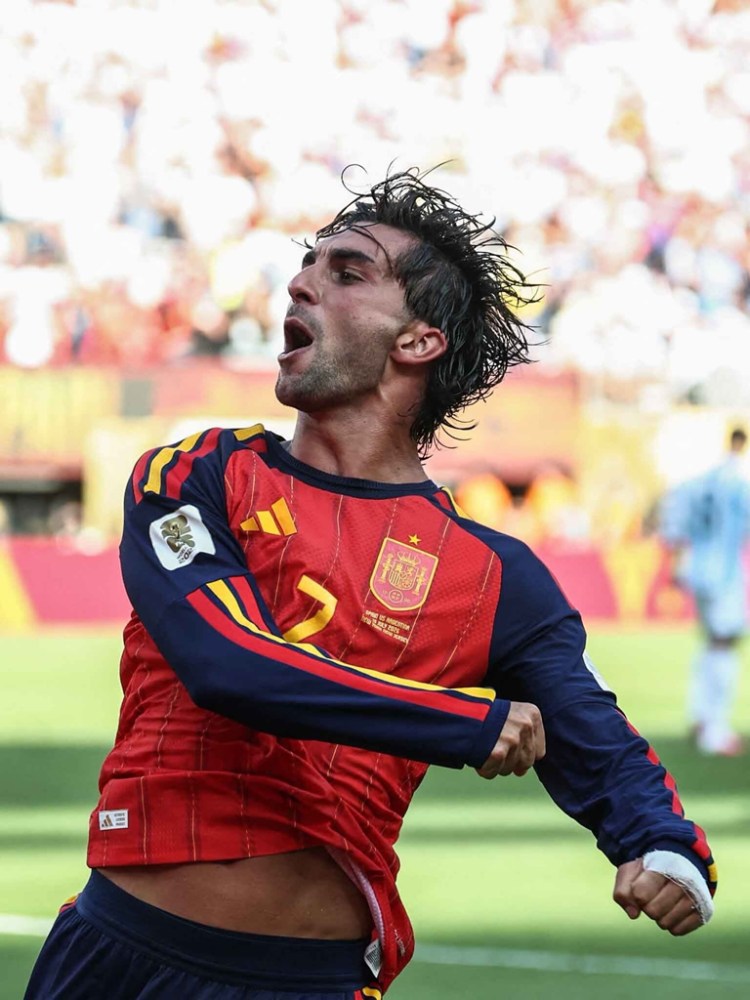
The Art of Patience
World Cup finals often promise fireworks.
This one offered something subtler—and, in its own way, more compelling.
Spain never appeared hurried. Every pass carried purpose. Every movement was designed to create another angle, another passing lane, another opportunity to pull Argentina out of shape.
Possession became both weapon and statement.
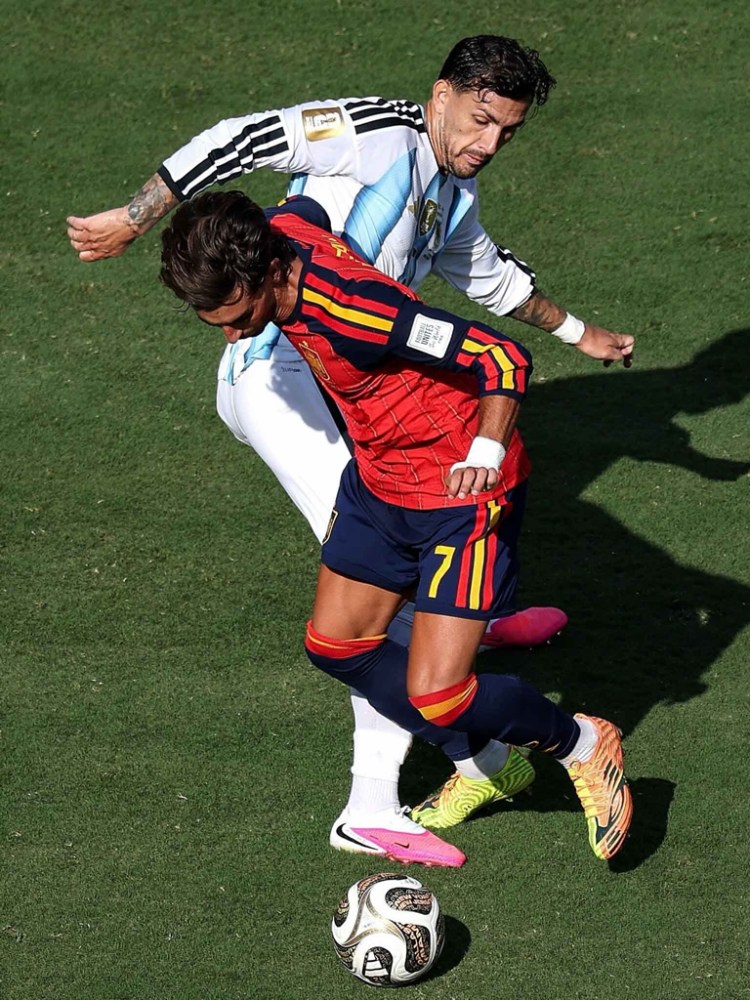
Argentina, disciplined and resilient, defended with immense determination. Their back line absorbed pressure that would have overwhelmed many teams, while their midfield worked tirelessly to close spaces and frustrate Spain’s intricate combinations.
For long stretches, the scoreline suggested balance.
The football suggested otherwise.
Spain dominated territory, dictated possession, and fashioned the clearer opportunities. The reigning champions survived because of extraordinary defensive commitment, but survival is not the same as control.
Minute by minute, Spain tightened their grip.
The match became less a contest of chances than a test of endurance—mental, physical, and tactical.
Eventually, even the strongest resistance begins to bend.
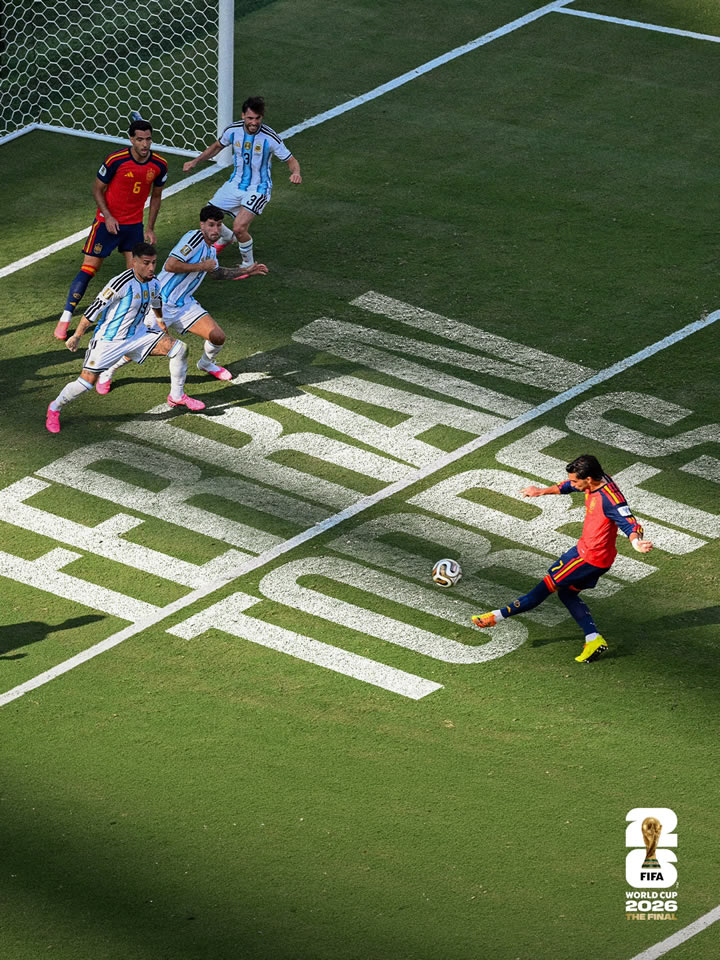
The Goal That Completed the Picture
Football has an uncanny sense of timing.
After nearly two hours of relentless probing, Spain found exactly the opening they had been seeking.
The move unfolded with the same composure that had defined their evening. No panic. No desperation. Just another carefully constructed attack, another sequence of intelligent movement, another opportunity patiently earned.
Ferran Torres supplied the finish.
The stadium erupted.
Spain had spent 106 minutes painting a masterpiece. Torres added the final brushstroke.
The goal felt inevitable—not because football is predictable, but because Spain had earned it through persistence, discipline, and belief in their collective identity.
Sometimes the most dramatic moments are those that have been quietly building all along.
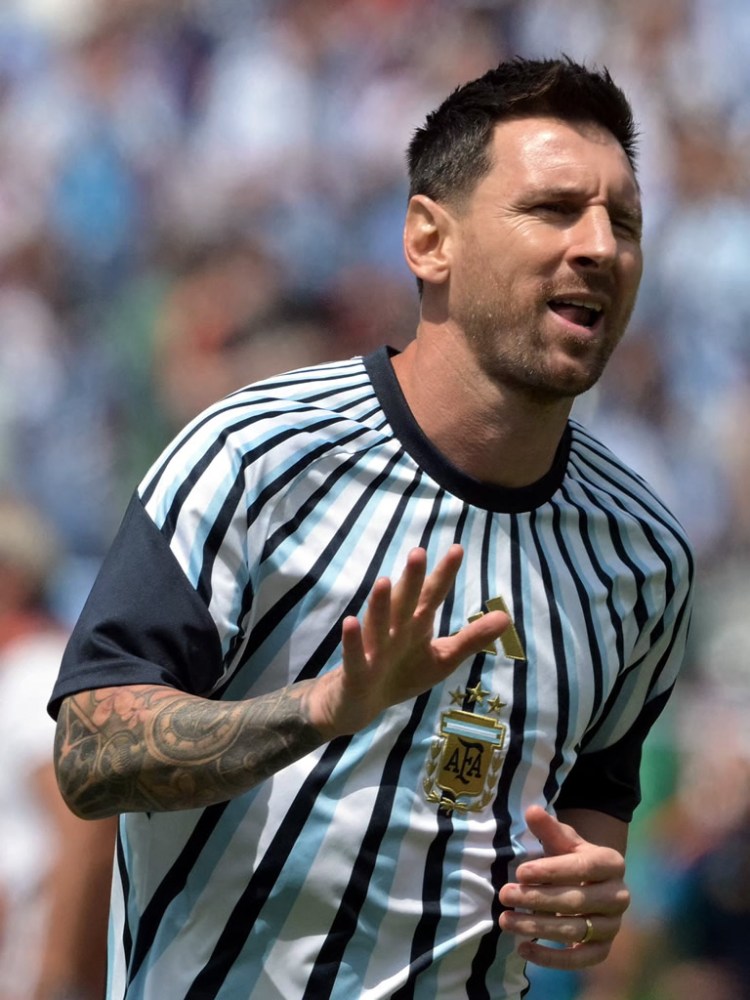
Messi’s Final Walk on the World’s Biggest Stage
Every World Cup creates unforgettable images.
In 2026, perhaps none carried greater emotional weight than Lionel Messi leading Argentina one last time.
The years have transformed him from prodigy to champion, from burdened genius to national icon. His triumph in Qatar had already answered every question history could ask. He no longer needed another trophy to validate his greatness.
Yet football remains beautifully indifferent to reputation.
Spain denied him space.
They denied Argentina rhythm.
They denied the moments from which legends are often born.
Messi searched for possibilities with the intelligence that has defined his career, but the avenues rarely appeared. The game unfolded around Spain’s control rather than Argentina’s inspiration.
When the final whistle sounded, there was disappointment, naturally.
But there was also perspective.
Few athletes leave the World Cup having fundamentally changed the history of both their nation and the sport itself. Messi departs with that distinction secure.
Some stories require one final triumph.
Others simply require the dignity of a final chapter.
A Team Greater Than Its Stars
Modern football often celebrates individuals.
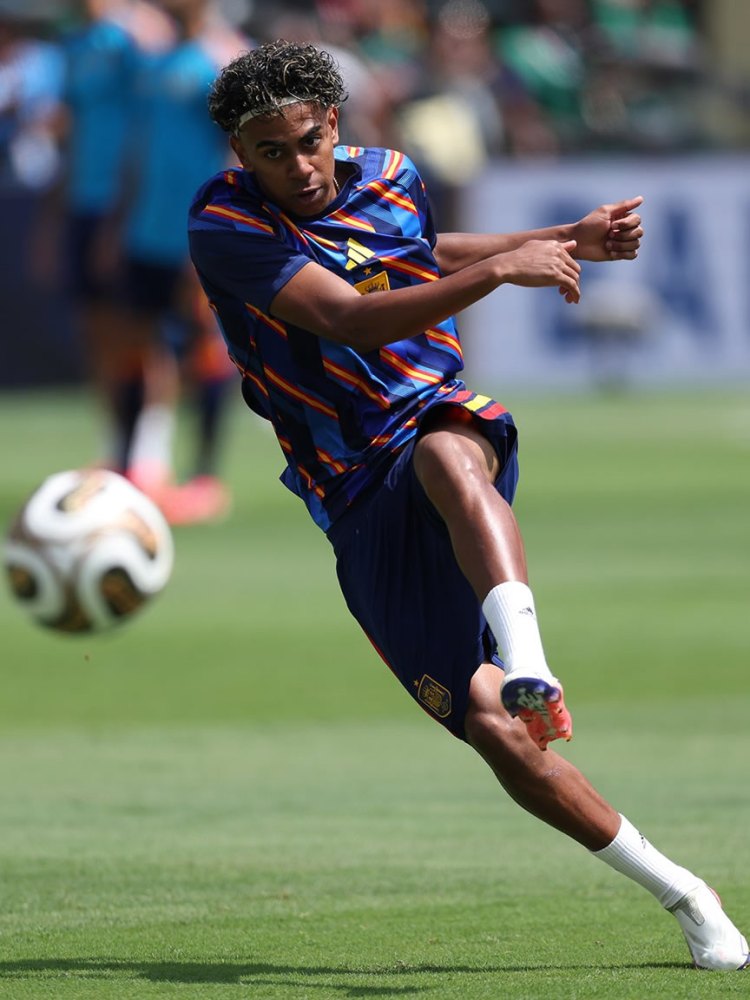
This World Cup belonged to a collective.
Spain arrived in North America without the singular aura of a once-in-a-generation superstar dominating every headline. Instead, they possessed something arguably more powerful—a squad in which every player elevated the next.
The defenders began attacks with confidence.
The midfield controlled both space and time.
The forwards pressed tirelessly and moved intelligently.
The substitutes entered seamlessly.
Every role mattered.
Every contribution accumulated.
By the final, Spain had become the tournament’s most complete side—not merely because of technical excellence, but because of extraordinary tactical harmony.
The winning goal belonged to Ferran Torres.
The victory belonged to everyone.
The Return of a Footballing Identity
The Spain that conquered the world in 2010 changed football forever.
Its philosophy inspired coaches across continents, reshaped academies, and redefined how possession could become an instrument of domination.
The 2026 champions are different.
More direct.
More athletic.
Perhaps even more adaptable.
Yet beneath those modern refinements remains the same essential belief: control the ball, trust your teammates, remain patient, and allow the game to unfold on your terms.
In an era increasingly defined by speed and transition, Spain reminded the football world that intelligence remains the game’s most enduring currency.
Their victory was not nostalgic.
It was evolutionary.

More Than a Champion
Every World Cup final eventually becomes memory.
Some are remembered for breathtaking goals.
Some for controversy.
Some for astonishing drama.
The 2026 final will be remembered for something quieter but no less significant: the triumph of a footballing philosophy executed almost flawlessly on the sport’s grandest stage.
Spain did not overwhelm Argentina with brilliance in isolated moments.
They wore them down with conviction.
They trusted the process when impatience might have been tempting.
They remained faithful to their identity until football finally rewarded them.
As confetti drifted across the New Jersey sky and Spanish players embraced beneath the glow of the stadium lights, the symbolism was unmistakable.
One generation had taken its final bow.
Another had announced itself to the world.
The trophy had changed hands.
Football had entered a new chapter.
And on a warm July night in America, Spain reminded the world that greatness is not always loud.
Sometimes, greatness is simply the courage to keep believing in the way you play.
That belief made them champions once again.

