
World Economic Forum Launches GRIP for Future-Ready Regulations

  • The World Economic Forum has launched a new global platform to reimagine regulation in the era of disruptive technology.

The initiative will unite global industry experts to create adaptive strategies for rapidly evolving sectors such as AI, healthcare, and digital finance.

This platform will test innovative solutions and provide practical tools to help governments craft forward-thinking regulations suited for a fast-changing world.

Professional video camera set up for a live broadcast at the World Economic Forum event, with a blue backdrop featuring the Forum's logo.

Geneva, Switzerland, August 10, 2025 – The World Economic Forum has launched the Global Regulatory Innovation Platform (GRIP), an international initiative aimed at enhancing how governments design and adapt regulations in response to rapid technological advancements.

As breakthroughs in artificial intelligence, biotechnology, and digital finance usher in the ‘Intelligent Age,’ regulatory innovation is becoming increasingly essential for creating effective, adaptive, and future-ready regulatory ecosystems. This new platform, led by the Forum, will address these challenges by providing a global space for cross-sector leaders to promote agile, human-centered, and future-oriented models that can keep up with the disruptions of today and tomorrow.

A church with a tall spire located in a mountainous area, surrounded by snow-covered trees and slopes.

“Innovation moves fast — regulation must too,” said Børge Brende, President, World Economic Forum. “GRIP enables governments to co-create policy frameworks that are agile, anticipatory, and ready for the technologies shaping our future.”
Over the next two years, GRIP will develop three essential tools:

  • A Global Regulatory Playbook: This will offer policy frameworks, case studies, and actionable guidance for creating regulation that supports innovation.
  • A Regulatory Future Readiness Index: This tool will assess how prepared governments are to regulate emerging technologies in a rapidly changing global landscape.
  • A Global Regulatory Innovation Hub: This hub will promote collaboration between innovators and regulators, enabling them to test and implement practical solutions to shared challenges.

“Sustainable economies can only thrive within forward-thinking and adaptable regulatory ecosystems. The future quality of life for our communities heavily relies on the work of regulators,” said Her Excellency Maryam Al Hammadi, Minister of State and Secretary General of the UAE Cabinet. “The Global Regulatory Innovation Platform aims to empower legislators around the world by providing them with advanced regulatory tools and data to keep up with the rapid pace of technological advancements.”

Boston Consulting Group will serve as a knowledge partner, collaborating with a network of leading legal, policy, and technology experts from the Forum’s Industry Communities as well as its Chief Legal and Compliance Officers communities.

In an era where public trust is declining and global standards are becoming increasingly inconsistent, GRIP introduces a new model for strategic, future-ready regulation. It aims to integrate public and private expertise from various sectors and regions to create more effective, resilient, and trustworthy regulatory frameworks that benefit everyone.

The World Economic Forum is dedicated to improving global conditions and serves as the International Organization for Public-Private Cooperation. The Forum brings together leading political, business, and societal figures to influence global, regional, and industry agendas.

Source: World Economic Forum

2025 Fortune Global 500: Top Companies Revealed

FORTUNE has announced the 2025 FORTUNE GLOBAL 500 list.

Walmart has retained its position as the number one retailer for the twelfth consecutive year.

The United States continues to lead over Greater China in terms of the number of companies represented.

A record 33 women are serving as CEOs of Fortune Global 500 companies, representing 6.6% of the total.

The Magnificent Seven companies achieved record aggregate revenues of $2 trillion and profits of $484 billion last year.

NEW YORK, July 29, 2025 — Today, Fortune released the 2025 Fortune Global 500™ list, which ranks the world’s largest corporations by revenue for the 2024 fiscal year.

Walmart has secured the number one position on the Fortune Global 500 list for the twelfth consecutive year. Amazon, State Grid, Saudi Aramco, and China National Petroleum follow it. The top ten companies on the Fortune Global 500 list generated over $370 billion in annual revenue, accumulating a total of $4.7 trillion.

Fortune’s authoritative ranking of the current corporate landscape highlights the significant dominance of U.S. companies, which number 138 in total. The U.S. continues to lead over Greater China, which has 130 companies, down three from the previous year. Greater China includes Mainland China, Hong Kong, Macau, and Taiwan. Notably, China and the U.S. together account for nine of the ten most profitable companies in the Fortune Global 500 rankings.

The financial sector remains the leader on the list, featuring 121 companies. It is followed by the energy sector with 79 companies, motor vehicles and parts with 35, technology with 34, and healthcare with 33. Together, these sectors represent 60% of the companies on the list and account for 66% of the total revenue generated.

The Magnificent Seven achieved a record aggregate revenue of $2 trillion and profits of $484 billion last year. Collectively, the companies—Amazon (No. 2), Apple (No. 8), Alphabet (No. 13), Microsoft (No. 22), Meta Platforms (No. 41), Nvidia (No. 66), and Tesla (No. 106)—generated a net income of $484 billion.

THE 2025 FORTUNE GLOBAL 500 TOP 10 LIST:

  • Walmart (U.S.)
  • Amazon.com (U.S.)
  • State Grid (China)
  • Saudi Aramco (Saudi Arabia)
  • China National Petroleum (China)
  • Sinopec (China)
  • UnitedHealth Group (U.S.)
  • Apple (U.S.)
  • CVS Health (U.S.)
  • Berkshire Hathaway (U.S.)

In 2025, companies on the Fortune Global 500 list achieved a record-breaking total revenue of $41.7 trillion, marking a 1.8% increase from the previous year. These companies employed 70.1 million people worldwide. In 2024, they also reported their second-highest profitability ever, with a combined profit of $2.98 trillion, reflecting a 0.4% rise compared to the prior year. Saudi Aramco, ranked No. 4, once again led the list in profitability, posting a net income of $105 billion and securing its position as the most profitable company for the fourth consecutive year.

  • The number of women serving as CEOs at Fortune Global 500 companies has reached a record high of 33, accounting for 6.6% of the total, which is an increase of five from the previous year. Notable leaders among them include Mary Barra of General Motors, recognized as Fortune’s 2025 Most Powerful Woman; Gail K. Boudreaux of Elevance Health; Jane Fraser of Citigroup; Sarah M. London of Centene; and Sandy Ran Xu of JD.com. The United States leads with 16 companies headed by women CEOs, followed by China with five, France with four, and both Brazil and the United Kingdom with two each.

Fortune Global 500 companies are located in 243 cities across 36 countries and territories around the world. The top five cities—Beijing, Tokyo, New York, Shanghai, and London—are home to nearly one-quarter of these companies. Notably, London has returned to the top five for the first time since 2022.

Nine companies debuted on the Fortune Global 500 list, including QNB Group (No. 419), Lithia Motors (No. 434), and ICICI Bank (India) (No. 464).

  • You can find the complete Global 500 list in the August/September issue of Fortune magazine.
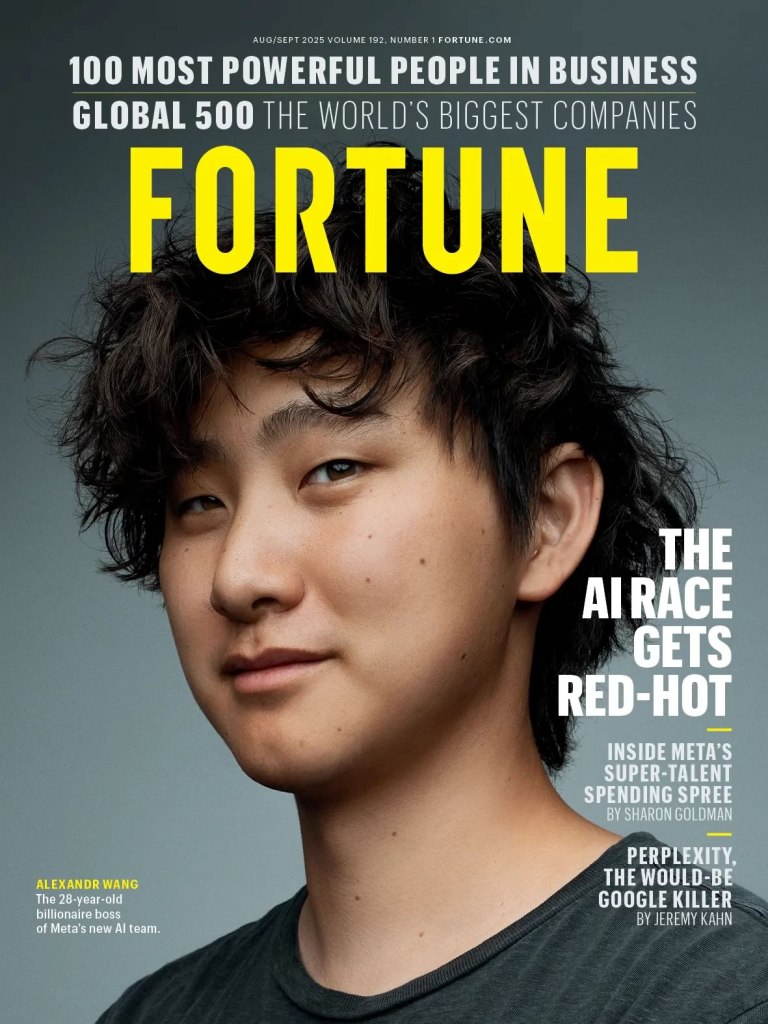
Close-up portrait of a young Asian man with dark hair, wearing a black shirt, featured on the cover of Fortune magazine's August/September 2025 issue, highlighting the 100 most powerful people in business.

“The Fortune Global 500 showcases the fascinating changes and significant shifts occurring in the global business landscape each year,” said Fortune CEO Anastasia Nyrkovskaya. “It highlights the stories of the companies, products, and people that are propelling our world forward. We are excited to share this global list, now in its 36th year, with audiences that value its authority and credibility.”

In her foreword for the August/September 2025 issue, Alyson Shontell, Fortune’s Editor in Chief and Chief Content Officer, stated, “We have tracked the Fortune 500 and Fortune Global 500—the world’s largest companies by revenue—for decades.” She summarized this by saying, “Our latest Global 500, which reflects 2024 performance, is more than just a ranking. It represents the calm before the storm in a profound geopolitical shift driven by AI, ongoing conflicts, and tariff uncertainties, all of which are reshaping the landscape for the world’s largest companies.”

Companies are ranked on the Fortune Global 500 based on their total revenues for fiscal years that end on or before March 31, 2025. To be included in the list, all companies must publish financial data and report part or all of their figures to a government agency. The most recent statistics in the list are those reported by the companies themselves, and any comparisons are made with the figures from the previous year as reported initially. Fortune does not adjust last year’s figures to account for any changes in accounting.

Fortune is a global multi-platform media company known for its trusted and award-winning reporting and information, aimed at individuals seeking to improve business practices. As an independently owned entity, Fortune shares stories about the world’s largest companies and their leaders, as well as a new generation of innovators driving business progress.

Both digitally and in print, Fortune evaluates corporate performance using rigorous benchmarks, holding companies accountable across various regions worldwide. Its renowned rankings include the Fortune 500, Fortune Global 500, Most Powerful Women, and World’s Most Admired Companies.

Fortune also fosters exceptional communities by bringing together industry thought leaders for exclusive summits and conferences, such as the Fortune Global Forum, Brainstorm Tech, and Fortune Most Powerful Women.

Source: Fortune Media (USA) Corporation

Global Tiger Day 2025: Celebrating Wildlife Conservation in India

New Delhi, India, July 29, 205 — Union Minister for Environment, Forest and Climate Change, Bhupender Yadav, presided over the celebrations of Global Tiger Day 2025, which were held today at the National Zoological Park in New Delhi.

July 29, celebrated as International Tiger Day, is much more than just a date on the calendar — it is a poignant moment for reflection and appreciation of one of nature’s most awe-inspiring creations. On this day, we honor the majestic tiger, a symbol of strength and grace, known for its fierce spirit and unyielding freedom. Happy International Tiger Day! Let us come together to champion the wild and protect the beautiful habitats that these incredible creatures call home.

During the event, the Minister highlighted the importance of maintaining ecological balance and fostering conservation awareness among children and expressed gratitude towards nature. Shri Yadav praised schools and teachers for their efforts in educating young minds about wildlife conservation and the preservation of biodiversity.

He emphasized the government’s dedication to wildlife conservation, stating, “Under the leadership of Prime Minister Shri Narendra Modi, the number of tiger reserves in India has grown from 46 in 2014 to 58 today. This increase demonstrates the Prime Minister’s strong commitment to protecting our national animal.”

The Minister announced the launch of a nationwide tree plantation drive, during which over 100,000 saplings will be planted across all 58 tiger reserves, making it one of the most extensive campaigns of its kind in the world.

Mr. Yadav also highlighted the International Big Cat Alliance (IBCA), initiated by India, which aims to protect the seven big cat species found globally. He mentioned that 24 countries have already agreed to join this global initiative, with the IBCA headquarters to be established in India.

A notable feature of the 2025 celebrations was the Eco-Shop Exhibition, which showcased eco-shops from various Tiger Reserves throughout the country. The exhibition included stalls offering a diverse range of community-based sustainable products and eco-development items sourced from the Western Ghats and Southern landscapes. These products exemplify a harmonious blend of cultural heritage and ecological responsibility.

The Minister also unveiled four important publications that each highlight a unique aspect of India’s wildlife conservation efforts under the National Tiger Conservation Authority (NTCA):

  1. A report titled “Status of Small Cats in the Tiger Landscape of India.”
  2. STRIPES Magazine – a special edition for Global Tiger Day.
  3. A book titled “Waterfalls of Tiger Reserves in India.”
  4. A book titled “Water Bodies Inside Tiger Reserves of India.”

The celebrations for Global Tiger Day 2025 highlight India’s enduring commitment to tiger conservation. They showcase a unified approach that combines grassroots involvement with policy-level strategies. It reflects an understanding that ecological integrity, community well-being, and international cooperation are vital for ensuring the long-term survival of tigers in the wild.

Source: Ministry of Environment, Forest and Climate Change, Government of India

Divya Deshmukh Crowned FIDE Women’s World Chess Champion 2025

Prime Minister Modi congratulates Divya Deshmukh on becoming the FIDE (International Chess Federation) Women’s World Chess Champion in 2025.

New Delhi, India, July 28, 2025 — The Prime Minister, Narendra Modi, congratulated Divya Deshmukh on becoming the FIDE (International Chess Federation) Women’s World Chess Champion 2025. “Koneru Humpy also displayed immense skill throughout the championship. Best wishes to both players in their future endeavors,” Mr. Modi stated.

Divya Deshmukh achieved a historic victory by defeating Koneru Humpy in a thrilling all-Indian final at the FIDE Women’s Chess World Cup, making her the first Indian champion of this prestigious tournament. The championship took place in the picturesque city of Batumi, Georgia, where Divya showcased her exceptional skill and determination.

After two intense days of classical chess, where both players fought valiantly but ended in draws, the fate of the championship was decided in an electrifying tie-breaker round. In the first rapid tie-breaker, both competitors fought hard, resulting in another draw. However, in the second rapid tie-breaker, Divya displayed remarkable composure and strategic brilliance, ultimately triumphing over Humpy with the black pieces.

This impressive victory not only grants Divya the esteemed title of ‘Grandmaster’ but also secures her a spot in the highly competitive Candidates tournament, propelling her further into the elite ranks of the chess world.

Humpy is one of the most accomplished and compact players in the world of chess. For over two decades, she has been a prominent representative of Indian women’s chess. Her achievements include numerous titles, such as two World Rapid Championships and two gold medals from the Asian Games. Additionally, she has been a vital member of the team that won gold at the Chess Olympiad.

The all-Indian final was a remarkable showcase of India’s impressive growth in sports, highlighting the incredible talent the country has nurtured. The fact that the match extended to a tie-breaker serves as a testament to the fierce competition and skill present among the players, underscoring the rich depth of talent that India has produced over the years.


WIPO Awards 2025: Recognizing Global Innovators in Intellectual Property

  • World Intellectual Property Organization (WIPO) Announces the Winners of the 2025 Global Awards: Celebrating Innovation and Impact Driven by Intellectual Property.

Geneva, Switzerland, July 24, 2025 — This year, ten small and medium-sized enterprises (SMEs), startups, and university spinoffs have won the WIPO Global Awards. Their innovative products include antibody therapeutics, sign-to-speech gloves, next-generation memory chips, and sustainable protein fermentation. These breakthroughs demonstrate the transformative power of intellectual property (IP) in enhancing lives, advancing technology, and fostering more sustainable communities.

Now in its fourth edition, the WIPO Global Awards recognize visionary entrepreneurs who utilize intellectual property (IP) to drive business growth while making substantial social and economic contributions. The winners this year include a diverse range of innovators addressing global challenges in health, the environment, agri-food, creative industries, and information and communications technology (ICT).

The ten winning SMEs, university spinouts, and startups were selected from over 780 applicants across 95 countries, highlighting the program’s global reach.

“This year’s awards emphasize the importance of intellectual property (IP) in addressing real-world challenges and creating new opportunities. The winners demonstrate how effectively leveraging IP can drive growth, inspire creativity, and provide solutions that benefit people globally. I extend my congratulations to them and look forward to witnessing how they continue to thrive, using IP as a crucial partner on their journey to market.”

— WIPO Director General Daren Tang

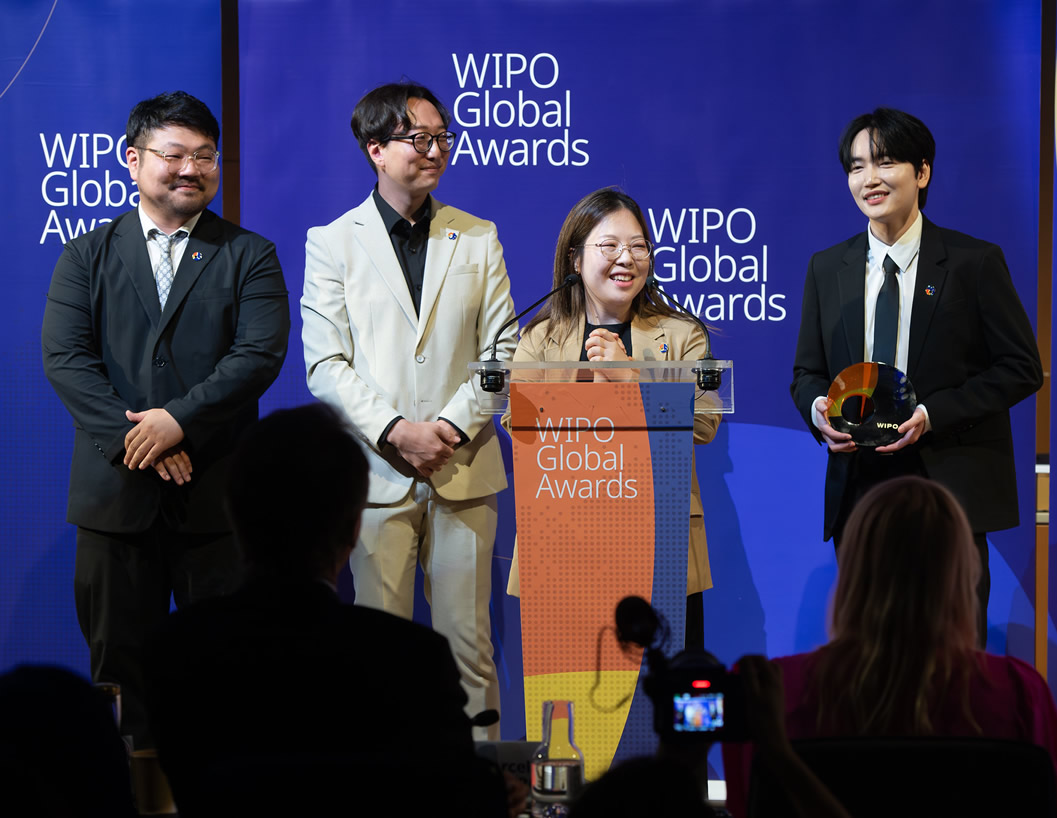
The awards were presented during a ceremony held at the WIPO headquarters in Geneva on July 11, 2025, as part of the WIPO Assemblies of Member States. During the event, the winners expressed their intentions to utilize WIPO’s support to enhance their intellectual property strategies, attract investments, and access new markets.

The winners of the WIPO Global Awards enjoy a range of benefits aimed at promoting their growth:

  • Personalized one-on-one mentoring to facilitate IP commercialization, including guidance on fundraising and business development.
  • Enhanced global visibility through WIPO platforms and partner networks.
  • Ongoing access to WIPO resources and advisory services for effective IP management.
  • Full sponsorship to attend the Awards Ceremony and related networking events in Geneva.

The 2025 WIPO Global Awards Winners

  • Health:

SME: Hummingbird Bio, Singapore, antibody therapeutics
Startup: Glovatrix, India, sign-to-speech gloves

  • Environment:

SME: Carbfix, Iceland, CO₂ mineral storage
Startup: Urban Inventors, Sri Lanka, anti-flood drain system

  • Agri-food:

SME: PhageLab, Chile, antibiotic alternatives for livestock farming
Startup: Planetary, Switzerland, mycoprotein fermentation tech

  • Creative industries:

SME: ClicknClear, United Kingdom, music rights licensing
Startup: CodeGream, Republic of Korea, 3D product showcase

  • ICT (Information and Communications Technology):

SME: Unitree Robotics, China, advanced robotics
Startup: Quinas Technology, United Kingdom, next-gen memory chips

In a bid to further champion diversity and inclusion in innovation, the 2025 edition introduced two new special recognitions for award winners, unlocking supplementary benefits:

  • Best Woman Entrepreneur 2025 – This award is presented to Edda Aradóttir, CEO of Carbfix (Iceland). It recognizes her visionary leadership and commitment to diversity, as well as her company’s effective use of intellectual property. The award is sponsored by She Loves Tech, a global accelerator for women-led startups. It includes mentorship from their CEO, as well as a speaking opportunity at their international conference.
  • Best Youth Entrepreneur 2025 – awarded to Aishwarya Karnataki, CEO of Glovatrix (India). This recognition celebrates a young entrepreneur (under 35) whose purpose-driven leadership inspires others beyond her invention. Support is provided by YE! at the International Trade Centre, a global platform for young entrepreneurs, which includes tailored access to their network and enhanced international visibility.

The Global Awards program is fundamentally aligned with WIPO’s mission to cultivate a global environment where intellectual property rights drive innovation and creativity for the benefit of all stakeholders. These independent awards, conferred by a jury of experts, aim to recognize and support individuals whose competencies contribute to societal advancement and improve the quality of life for communities. Recipients of the award will receive a tailored mentorship program designed to help them utilize intellectual property to foster business growth, as well as exclusive resources to enhance their access to funding and business opportunities.

  • The World Intellectual Property Organization (WIPO) is a specialized agency of the United Nations that plays a critical role in supporting global innovators and creators. It ensures that their intellectual property rights are protected, facilitating the safe transition of their ideas to the marketplace and contributing to the enhancement of lives around the world.

Source: The World Intellectual Property Organization (WIPO)

— The Author is an alumnus of the WIPO Academy, Geneva, Switzerland.

UNESCO Director General Responds to US Withdrawal

  • Audrey Azoulay, the Director-General of UNESCO, released a statement regarding the United States’ withdrawal from UNESCO.

Paris, July 22, 2025 — Audrey Azoulay, Director-General of UNESCO, has issued the following statement regarding the withdrawal of the United States from UNESCO:

“I deeply regret President Donald Trump’s decision to withdraw the United States from UNESCO once again—a decision that will take effect at the end of December 2026.

“This choice contradicts the fundamental principles of multilateralism. It may primarily affect our many partners in the United States—communities seeking site inscription on the World Heritage List, Creative City status, and University Chairs.

“While this announcement is regrettable, it was anticipated, and UNESCO has prepared for it.

“In recent years, we have implemented significant structural reforms and diversified our funding sources. Thanks to the efforts made by the Organization since 2018, the decline in U.S. financial contributions has been offset, now representing 8% of the Organization’s total budget compared to 40% for some other United Nations entities. At the same time, UNESCO’s overall budget has steadily increased. Today, the Organization is better protected financially, with the steady support of numerous Member States and private contributors, whose voluntary contributions have doubled since 2018.

“At this stage, the Organization is not considering any layoffs.

“Despite President Trump’s initial withdrawal in 2017, UNESCO has intensified its efforts to contribute to peace and has demonstrated the essential nature of its mandate.

“The Organization completed the largest operation in its history with the reconstruction of the old city of Mosul, which began in 2018. It also adopted the first and only global standard-setting instrument on the ethics of artificial intelligence. It developed major programs to support culture and education in conflict settings, including those in Ukraine, Lebanon, and Yemen. Furthermore, it has intensified its efforts in biodiversity conservation, natural heritage preservation, and girls’ education.

“The reasons cited by the United States for withdrawing from the Organization are the same as those put forth seven years ago, despite the profound changes that have occurred since then. Political tensions have receded, and UNESCO today serves as a rare forum for consensus on concrete and action-oriented multilateralism.

“These claims also contradict the reality of UNESCO’s efforts, especially in the realm of Holocaust education and the fight against antisemitism.

“UNESCO is the only United Nations agency responsible for these issues, and its work has received unanimous acclaim from major specialized organizations, including the United States Holocaust Memorial Museum in Washington, D.C., the World Jewish Congress, its American Section, and the American Jewish Committee (AJC). UNESCO has assisted 85 countries in implementing tools and training teachers to educate students about the Holocaust and genocides, while combating Holocaust denial and hate speech.

“UNESCO will continue to carry out these missions, despite the inevitable reduction in resources.

“The purpose of UNESCO is to welcome all nations of the world, and the United States will always be welcome.

“We will continue to work closely with all our American partners in the private sector, academia, and non-profit organizations, and we will pursue political dialogue with the U.S. administration and Congress.”


  • The United Nations Educational, Scientific, and Cultural Organization (UNESCO), comprising 194 Member States, plays a crucial role in fostering peace and security around the globe. It achieves this by spearheading multilateral cooperation in various enriching fields, including education, science, culture, communication, and information.
  • With its headquarters located in the vibrant city of Paris, UNESCO extends its impact through offices in 54 countries, employing a dedicated workforce of over 2,300 professionals from diverse backgrounds. This Organization is entrusted with the stewardship of more than 2,000 prestigious World Heritage sites, breathtaking Biosphere Reserves, and distinct Global Geoparks, preserving the world’s cultural and natural heritage for future generations.
  • UNESCO also cultivates networks of Creative, Learning, Inclusive, and Sustainable Cities, promoting holistic urban development. Additionally, it supports a vast educational ecosystem, encompassing over 13,000 affiliated schools, esteemed university chairs, and numerous training and research institutions. Two hundred national commissions worldwide further strengthen this extensive network, each playing a vital role in fulfilling UNESCO’s mission. Leading these efforts is the current Director-General, Audrey Azoulay, whose vision guides the Organization in its commitment to fostering a more educated, culturally rich, and sustainable world.

Source: UNESCO

IMF’s Gita Gopinath Returns to Harvard as Economics Professor

Gita Gopinath, the First Deputy Managing Director, will leave the IMF to return to the Harvard Faculty of Economics.

Washington, DC, July 22, 2025 — Kristalina Georgieva, Managing Director of the International Monetary Fund (IMF), announced today that Gita Gopinath, First Deputy Managing Director, will leave the Fund at the end of August to return to Harvard University. There, she will assume the role of inaugural Gregory and Ania Coffey Professor of Economics in the Department of Economics. Ms. Gopinath joined the IMF in January 2019 as Chief Economist and was promoted to First Deputy Managing Director in January 2022.

In making the announcement, Ms. Georgieva stated, “Gita has been an outstanding colleague—an exceptional intellectual leader, dedicated to the mission and members of the Fund, and an excellent manager who genuinely cares about the professional growth and well-being of our staff. She joined the Fund as a highly respected academic in the fields of macroeconomics and international finance. Admiration for Gita only increased throughout her time at the Fund, where her analytical rigor was complemented by practical policy advice offered to our members during a particularly challenging period marked by the pandemic, wars, the cost-of-living crisis, and significant shifts in the global trading system.”

Ms. Georgieva stated: “Gita led the Fund’s analytical and policy initiatives with clarity, aiming for the highest standards of rigorous analysis during a complex period marked by high uncertainty and a rapidly changing global economic environment. She managed the Fund’s multilateral surveillance and analytical work related to fiscal and monetary policy, debt, and international trade. Gita made significant contributions to systemic country surveillance and the Fund’s country programs, including those for Argentina and Ukraine. As a key member of my senior leadership team, Gita represented the Fund with integrity and strength in various international forums, notably the G-7 and G-20.”

She also mentioned that Ms. Gopinath—the first female Chief Economist in the history of the IMF—has a unique combination of brilliance and humility that we all admire. “As Chief Economist, Gita ensured that the World Economic Outlook remained the leading report on the global economy, an awe-inspiring achievement during the COVID-19 pandemic, which posed unprecedented challenges for our members. Gita also led the Fund’s work on the Integrated Policy Framework (IPF), providing a comprehensive analytical framework to help countries identify the appropriate policies for macroeconomic and financial stability. Additionally, she co-authored the Pandemic Plan, outlining strategies to end the COVID-19 crisis—a significant intellectual contribution widely recognized for addressing a crucial global need by setting achievable vaccination targets for the world.”

Upon her departure, Ms. Gopinath stated, “I am truly grateful for my time at the IMF, first as Chief Economist and then as First Deputy Managing Director. I have had the privilege of working closely with the IMF’s talented and dedicated staff, management colleagues, the Executive Board, and representatives from various countries. I want to extend my special thanks to Kristalina and her predecessor, Christine Lagarde, for the unique opportunity to serve the IMF’s membership during a period of unprecedented challenges. I now return to my academic roots, where I look forward to continuing to advance research in international finance and macroeconomics to address global challenges, as well as training the next generation of economists.”

Managing Director Georgieva will announce a successor to Ms. Gopinath in due course.

Source: International Monetary Fund (IMF)

Explore the Best Cities for Students in 2026

QS has announced the Best Student Cities Ranking for 2026.

LONDON, July 15, 2025 — Seoul has been named the world’s best study destination, according to the QS Best Student Cities Ranking, ending London’s six-year reign at the top. Seoul has moved up two spots, reflecting its strong international appeal and an outstanding selection of universities. London has dropped to third place due to a decrease in its Affordability rating.

QS has ranked 150 cities across 58 countries and territories. The US and UK have the most representation, with 16 cities each. Vienna enters the top 10, while Kuala Lumpur (12th), Taipei (14th), and Hong Kong (17th) make it into the top 20.

Ju-Ho Lee, the Deputy Prime Minister and Minister of Education of the Republic of Korea stated, “We are proud that Seoul has been recognized as the best student city in the world. This achievement reflects the global confidence in Korea’s higher education system. It showcases Seoul’s ability to combine academic excellence with a vibrant culture, cutting-edge innovation, and a safe, welcoming environment.”

Global Highlights

  • In the UK, only Nottingham (49th) and Leeds (51st) have seen improvements. The UK excels in Desirability but faces challenges with Affordability.
  • Among all ranked US cities, only Boston (15th) has improved; however, US cities continue to struggle with Student Mix and Desirability.
  • All four Canadian cities have dropped in rankings, but they all remain in the top 100, led by Montreal (18th).
  • Melbourne and Sydney continue to rank in the top 10, reinforcing Australia’s status as one of the world’s premier study destinations.
  • Tokyo ranks second globally and leads in Employer Activity.
  • Beijing achieves its highest position ever at 13th, leading all eight ranked cities in Mainland China.
  • Mumbai, India, has entered the top 100 at 98th place, thanks to its strong performance in Affordability (11th) and Employer Activity (37th).
  • Germany and Australia are the only countries with two cities in the top 10; both Munich and Berlin are highly regarded by students and graduates who have studied and lived there.
  • Paris maintains its 7th place and stands out as the European leader in the QS World University Rankings indicator, reflecting its exceptional universities.
  • Madrid has entered the Top 30, while Milan and Rome are now in the Top 50.
  • Amman ranks as the highest city in the Arab Region, at 64th, marking an impressive 19-place rise year-on-year. Cairo leads in Africa, ranking 71st.
  • Buenos Aires tops the Latin America rankings, placing 32nd and improving by 10 spots, followed by Santiago at 50th.

QS BEST STUDENT CITIES 2026

RANK – CITY – COUNTRY

  1. Seoul – South Korea
  2. Tokyo – Japan
  3. London – United Kingdom
  4. Munich – Germany
  5. Melbourne – Australia
  6. Sydney – Australia
  7. Berlin – Germany
  8. Paris – France
  9. Zurich – Switzerland
  10. Vienna – Austria
  11. Singapore – Singapore
  12. Kuala Lumpur – Malaysia
  13. Beijing – China (Mainland)
  14. Taipei – Taiwan
  15. Boston – United States
  16. Edinburgh – United Kingdom
  17. Hong Kong SAR – Hong Kong SAR
  18. Kyoto – Japan
  19. Montreal – Canada
  20. Amsterdam – Netherlands
  21. Lausanne – Switzerland
  22. Toronto – Canada
  23. New York – United States
  24. Stockholm – Sweden
  25. Auckland – New Zealand
  26. Brisbane – Australia
  27. Shanghai – China (Mainland)
  28. Madrid – Spain
  29. Prague – Czech Republic
  30. Vancouver – Canada
  31. Adelaide – Australia
  32. Buenos Aires – Argentina
  33. Leuven – Belgium
  34. Copenhagen – Denmark
  35. Barcelona – Spain
  36. Glasgow – United Kingdom
  37. Perth – Australia
  38. Canberra – Australia
  39. Dublin – Ireland
  40. Manchester – United Kingdom
  41. Newcastle Upon Tyne – United Kingdom
  42. San Francisco – United States
  43. Los Angeles – United States
  44. Milan – Italy
  45. Coventry – United Kingdom
  46. Rome – Italy
  47. Bristol – United Kingdom
  48. Chicago – United States
  49. Nottingham – United Kingdom
  50. Santiago – Chile
  51. Leeds – United Kingdom
  52. Gothenburg – Sweden
  53. Brussels – Belgium
  54. Lyon – France
  55. Bangkok – Thailand
  56. Warsaw – Poland
  57. Brno – Czech Republic
  58. Lisbon – Portugal
  59. Birmingham – United Kingdom
  60. Helsinki – Finland
  61. Istanbul – Türkiye
  62. Liverpool – United Kingdom
  63. Osaka – Japan
  64. Amman – Jordan
  65. Belfast – United Kingdom
  66. Turin – Italy
  67. Sheffield – United Kingdom
  68. Budapest – Hungary
  69. Nanjing – China (Mainland)
  70. Philadelphia – United States
  71. Cairo – Egypt
  72. Hsinchu – Taiwan
  73. Mexico City – Mexico
  74. Washington DC – United States
  75. Dubai – United Arab Emirates
  76. Sharjah – United Arab Emirates
  77. Cape Town – South Africa
  78. Oslo – Norway
  79. Ankara – Türkiye
  80. Abu Dhabi – United Arab Emirates
  81. Atlanta – United States
  82. Ottawa – Canada
  83. Valencia – Spain
  84. Riyadh – Saudi Arabia
  85. Doha – Qatar
  86. Aberdeen – United Kingdom
  87. San Diego – United States
  88. Manila – Philippines
  89. Pittsburgh – United States
  90. Wuhan – China (Mainland)
  91. Almaty – Kazakhstan
  92. Brighton – United Kingdom
  93. Tainan – Taiwan
  94. Christchurch – New Zealand
  95. Gold Coast – Australia
  96. Seattle – United States
  97. Beirut – Lebanon
  98. Mumbai – India
  99. Bogota – Colombia
  100. Johannesburg – South Africa
  101. Sao Paulo – Brazil
  102. Athens – Greece
  103. Baltimore – United States
  104. Delhi – India
  105. Riga – Latvia
  106. Toulouse – France
  107. Al-Ain – United Arab Emirates
  108. Bangalore – India
  109. Graz – Austria
  110. Krakow – Poland
  111. Monterrey – Mexico
  112. Nagoya – Japan
  113. Taichung – Taiwan
  114. Houston – United States
  115. Vilnius – Lithuania
  116. Jakarta – Indonesia
  117. Baku – Azerbaijan
  118. Busan – South Korea
  119. Guangzhou – China (Mainland)
  120. Stuttgart – Germany
  121. Yogyakarta – Indonesia
  122. Jeddah – Saudi Arabia
  123. Bandung – Indonesia
  124. Xi’an – China (Mainland)
  125. Leicester – United Kingdom
  126. Miami – United States
  127. Astana – Kazakhstan
  128. Chennai – India
  129. Tallinn – Estonia
  130. Taoyuan District – Taiwan
  131. Daegu – South Korea
  132. Tianjin – China (Mainland)
  133. Pretoria – South Africa
  134. Macau – Macau SAR
  135. Lima – Peru
  136. Dhaka – Bangladesh
  137. Montpellier – France
  138. Bishkek – Kyrgyzstan
  139. Tel Aviv-Yafo – Israel
  140. Wroclaw – Poland
  141. Izmir – Türkiye
  142. Kaunas – Lithuania
  143. Surabaya – Indonesia
  144. Rio de Janeiro – Brazil
  145. Shah Alam – Malaysia
  146. Chengdu – China (Mainland)
  147. Dallas – United States
  148. Cluj-Napoca – Romania
  149. Durham – United States
  150. Irbid – Jordan

The QS Best Student Cities ranking highlights the top urban destinations for international students based on a diverse range of indicators divided into six main categories.

To be eligible for inclusion, each city must have a population of over 250,000 and host at least two universities that are featured in the most recent QS World University Rankings. Whenever possible, population metrics are based on the metropolitan area.

The six main categories considered are:

  • University Rankings
  • Student Mix
  • Desirability
  • Employer Activity
  • Affordability
  • Student views


Source: QS

Apply Now: Sustainable Governance Course for University Leaders

Call for applications for the third cohort of the course ‘Sustainable University Leadership and Governance: Advancing the 2030 Agenda’.

This initiative targets university Vice-Chancellors and governance teams to drive strategic change for sustainability.

Paris, France, June 10, 2025 — In celebration of World Environment Day on June 5, the UNESCO International Institute for Higher Education in Latin America and the Caribbean (UNESCO IESALC) has announced the call for applications for the third cohort of the international course titled “Sustainable University Leadership and Governance: Towards the 2030 Agenda.” This initiative is designed for university Vice-Chancellors and governance teams who are interested in driving a strategic transformation toward sustainability.

Universities not only generate knowledge, but they also lead, inspire, and mobilize entire communities. In this context, the course aims to strengthen institutional leadership capacities to integrate sustainability as a central aspect of university development.

A transformative experience for driving change

Throughout the course, participating teams will:

  • Explore models for incorporating the Sustainable Development Goals (SDGs) into institutional strategic plans.
  • Engage in discussions with international experts in sustainability, governance, and change management.
  • Conduct an institutional self-assessment focusing on teaching, research, governance, and social engagement.
  • With specialized mentoring, design an Institutional Implementation Plan (IIP) and a Sustainability Roadmap.
  • Participants will receive personalized monitoring for six months to support implementation and assess impact in 2025.
  • Participants will join the Vice-Chancellors’ Network for Sustainability to share experiences and best practices and build alliances within their region.

Course structure

  • In-Person Start: September 2025, in Bogotá, Colombia. This phase includes three days of face-to-face workshops, visits to universities, and the signing of the Institutional Commitment to Sustainability.
  • Virtual Training: Eight weeks of training will be provided, featuring both synchronous and asynchronous sessions for Vice-Chancellors and two members of the institutional team.
  • Mentoring Period: A six-month mentoring program will follow, aimed at implementing and monitoring the progress of the institutional plan, as well as evaluating its actual impact.

Course objectives

  • Guide government teams in understanding the opportunities presented by the Sustainable Development Goals (SDGs) and develop a roadmap aligned with the 2030 Agenda.
  • Provide tools to implement the Sustainable Development Goals (SDGs) in teaching, research, institutional management, and outreach initiatives.
  • Incorporate the principles of sustainability into university culture and governance.
  • Explore conceptual frameworks and analyze best practices of universities in the region.
  • Foster alliances, cooperation, and peer learning.
  • Design and implement an institutional plan with specific and measurable goals.

Why participate?

As awareness of the crucial role universities play in advancing the Sustainable Development Goals (SDGs) continues to grow, effective practical implementation often falls short. This course presents a unique and concrete opportunity to bridge the gap between commitment and action. Participants will explore innovative strategies and collaborative approaches to steer higher education institutions toward fostering a more sustainable future, empowering them to make a meaningful impact in their communities and beyond.

Participants receive the final certification, which carries UNESCO recognition.

The Course Starts in September 2025 in Bogota, Colombia.

Source: UNESCO

— The editor of CitiTimes is a UNESCO-IIEP-certified higher education consultant.

AI in Education: UNESCO’s Vision for 2025

  • UNESCO dedicates the International Day of Education 2025 to focus on Artificial Intelligence.

The Director-General of UNESCO, Audrey Azoulay, has declared that UNESCO has dedicated International Education Day 2025 (Friday, January 24) to exploring the opportunities and challenges associated with artificial intelligence. She has called upon the Member States of UNESCO to prioritize investments in training for educators and students regarding the responsible application of this technology in education.

“AI offers major opportunities for education, provided that clear ethical principles guide its deployment in schools. To reach its full potential, this technology must complement the human and social dimensions of learning rather than replace them. It must become a tool at the service of teachers and pupils, with the primary objective being their autonomy and well-being.” — Audrey Azoulay, UNESCO Director-General.

In 2025, UNESCO will dedicate the International Day of Education to the discourse on artificial intelligence, aiming to facilitate a global conversation regarding integrating this technology within educational frameworks. The organization has organized conferences in Paris and New York and a webinar to engage stakeholders in this critical dialogue.

Artificial intelligence is becoming increasingly integrated into the field of education. In high-income countries, more than two-thirds of secondary school students utilize generative AI tools to assist with their academic assignments. Educators are increasingly adopting AI technologies to facilitate lesson preparation and assess student performance. Furthermore, the school guidance and admissions processes, traditionally overseen by educators and experts, are increasingly influenced by AI systems.

Education professionals face a significant gap in clear guidelines for implementing artificial intelligence (AI) in educational environments. According to a survey conducted by UNESCO in May 2023, encompassing 450 institutions, only 10% of schools and universities have established an official framework for integrating AI.

As of 2022, a mere seven countries had devised AI frameworks or programs directed at educators, while only 15 incorporated objectives related to AI training within their national curricula. Concurrently, many countries are enacting restrictions on using new technologies in classrooms. Recent data from UNESCO indicates that nearly 40% of countries have implemented laws or policies prohibiting the use of mobile phones in schools, a notable increase from 24% reported in July 2023.

In education, UNESCO published the inaugural Guidance for Generative AI in Education and Research in September 2023. Furthermore, in 2024, the organization introduced two competency frameworks for artificial intelligence for students and educators. These frameworks address the potential advantages and associated risks of AI technology. These publications represent a concerted effort to foster artificial intelligence’s ethical, inclusive, and responsible application.

  • UNESCO also points out that the resources governments allocate towards AI must be in addition to, and not divert from, the financial resources already committed to education.

The United Nations Educational, Scientific and Cultural Organization (UNESCO) comprises 194 member states. It fosters peace and security through multilateral cooperation in education, science, culture, communication, and information. Headquartered in Paris, UNESCO maintains offices in 54 countries and employs over 2,300 professionals. The organization is responsible for the oversight of more than 2,000 World Heritage sites, Biosphere Reserves, and Global Geoparks. Furthermore, UNESCO facilitates networks for Creative Cities, Learning Cities, Inclusive Cities, and Sustainable Cities and manages more than 13,000 affiliated schools, university chairs, training institutions, and research entities.