UNESCO’s MONDIACULT 2025: A Global Agenda for Culture

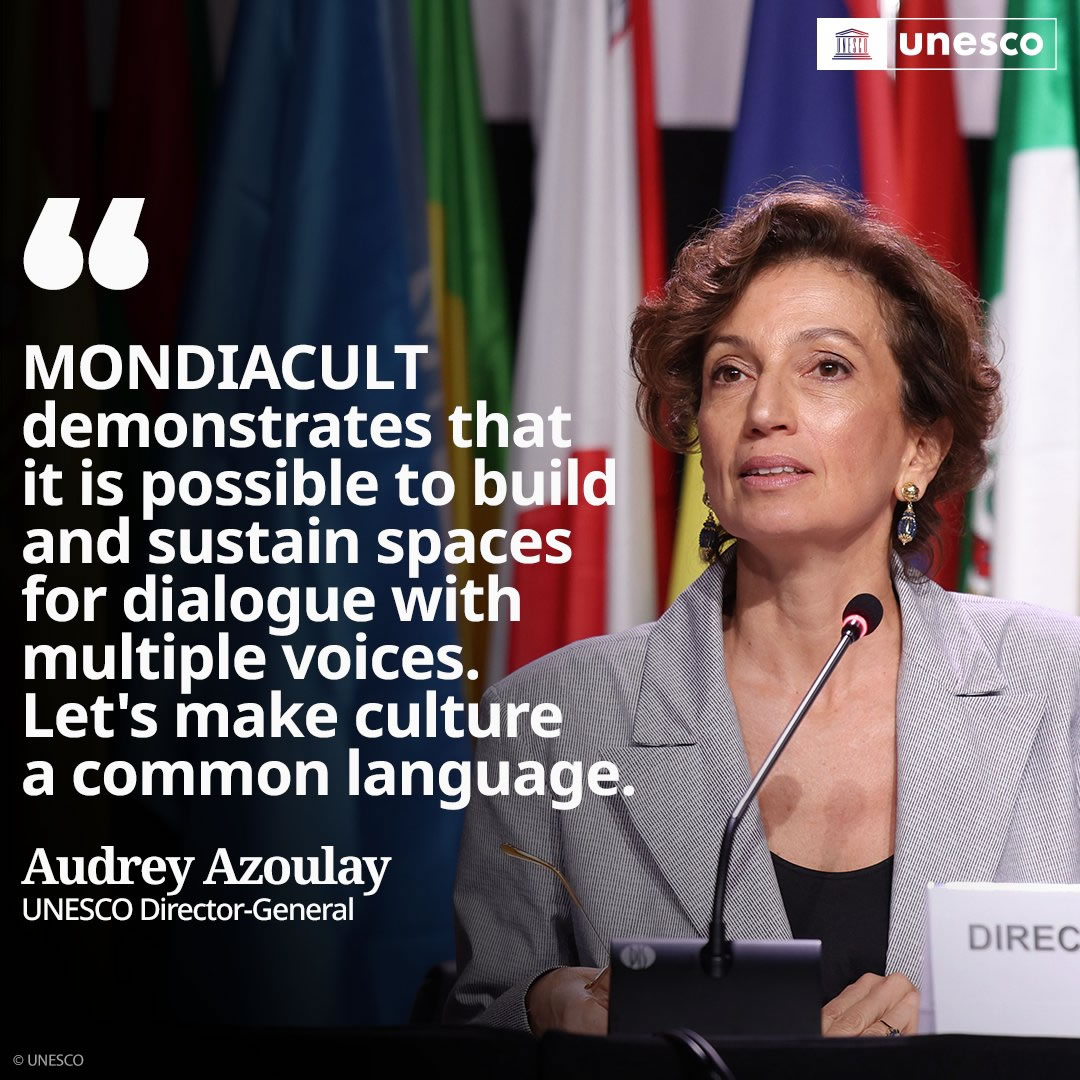
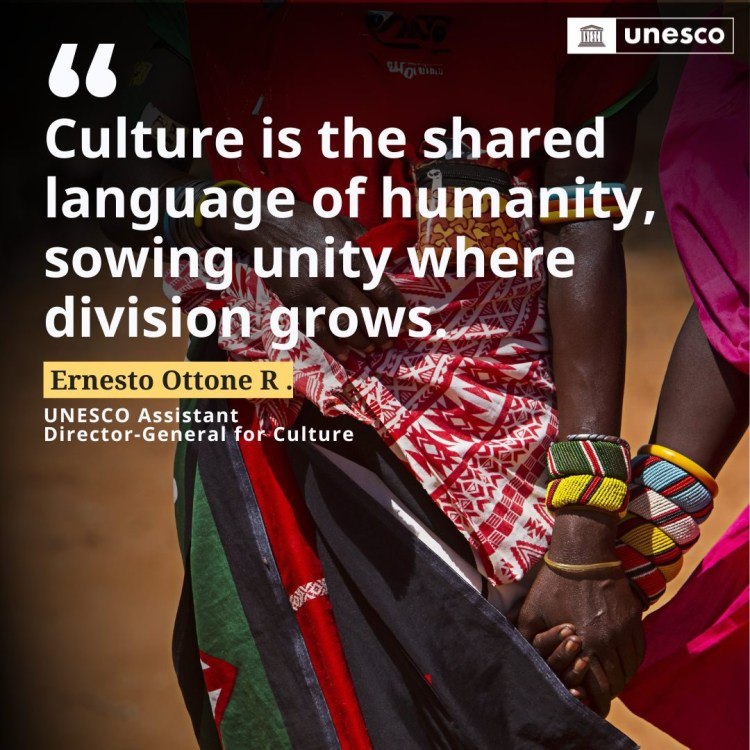
MONDIACULT 2025: UNESCO will convene Ministers of Culture from all member states in Barcelona to collaboratively shape future cultural policies.

UNESCO Headquarters, September 22, 2025 — MONDIACULT, UNESCO’s global Conference on cultural policies, will convene cultural actors, partners, and leaders from around the world in Barcelona, Spain, from September 29 to October 1, 2025. The purpose of the Conference is to shape and commit to a global agenda for Culture.

This 2025 edition will address current trends, challenges, and opportunities within the cultural sector, as well as the progress made since the last Conference in 2022, which recognized Culture as a “global public good.” In support of these initiatives, UNESCO will launch its first-ever Global Report on Cultural Policies, which will assess the impact of Culture across all dimensions of development.

MONDIACULT

MONDIACULT is the UNESCO World Conference on Cultural Policies and Sustainable Development, held every four years. It serves as the leading global platform for dialogue and cooperation on cultural policies. In 2025, MONDIACULT will be hosted by the Government of Spain in Barcelona, bringing together Ministers of Culture from all UNESCO Member States, alongside representatives from intergovernmental organizations, academia, civil society, youth, cultural professionals, and private sector partners.

Building on the MONDIACULT 2022 Declaration adopted in Mexico City, the 2025 edition reviews progress and shapes collective responses to emerging challenges and opportunities for the cultural and creative sector. The Conference focuses on the six interrelated priority areas of MONDIACULT. In addition, MONDIACULT 2025 addresses two cross-cutting focus areas of growing global relevance: Culture and Artificial Intelligence, as well as Culture and Peace.

At the end of September, UNESCO brings together representatives from its 194 Member States to shape a global roadmap for cultural policies. The event will be opened on Monday, September 29, by Audrey Azoulay, Director-General of UNESCO, and Pedro Sánchez, President of the Government of Spain. Over 100 ministers of Culture and 1,200 participants, including cultural professionals, NGOs, and international organizations, will take part in the debates.

Over the past twenty years, UNESCO has assisted more than 150 countries in developing or enhancing their cultural policies. MONDIACULT 2025 will further strengthen this commitment by supporting nations in creating informed policies and promoting vibrant creative sectors.

The Conference will also provide an opportunity to discuss UNESCO’s recent achievements in utilizing culture as a key driver for development, as well as for crisis response and recovery. Several other pressing issues will be addressed, including the enhancement of the role and contributions of Indigenous Peoples in shaping cultural policies, supporting the sector’s digital transformation—particularly in light of the rapid advancements in artificial intelligence—and the global effort to combat the illicit trafficking of cultural property, which includes the launch of UNESCO’s virtual museum of stolen cultural objects.

At the conclusion of the Conference, Ministers of Culture will adopt an outcome document derived from a comprehensive consultation process, outlining key global policy priorities for the coming years.

Source: UNESCO

UNESCO’s Digital Learning Week: Shaping AI’s Role in Education

UNESCO convenes global leaders during Digital Learning Week 2025 to design inclusive and human-centered futures for AI in education.

Paris, France, September 15, 2025 — UNESCO’s Digital Learning Week 2025, which took place last week in Paris, examined the impact of artificial intelligence on education and its implications for learners, educators, and education systems around the globe. It raises important questions: Do we still need classrooms, teachers, administrators, and textbooks?

The event challenged the standard framing of debates surrounding AI in education, which often presents extreme viewpoints—whether AI will enhance students’ skills or diminish them, empower teachers or replace them, and whether it will save education or threaten its existence. In reality, the situation is much more complex and requires thoughtful policy decisions. The real challenge lies in collectively navigating these complexities.

“AI is creating disruptions in education. It raises human and policy dilemmas and forces us to reflect on the directions we should take. The future of education will be shaped by the policy choices that we make about education investment, about pedagogy, about governance, and about the ethical principles we uphold. For this, strong, decisive leadership is critical.”

— Stefania Giannini, Assistant Director-General for Education at UNESCO.

  • Directions for AI and the future of education

On the first day of Digital Learning Week 2025, UNESCO hosted a private ministerial session that served as a strategic platform for in-depth discussions on national strategies and the leadership required to address shared challenges. These challenges included curriculum reform, teacher training, and the critical need to prioritize the safety of learners.

The dialogue concluded with a shared vision and a strong commitment: the integration of AI in education must be human-centered, equitable, safe, and ethical.

Ministers identified five urgent priorities, from which a set of key directions emerged that set an impactful tone for the leading conference:

  1. Addressing the growing “AI divide”
  2. Ensuring safety and ethics to protect all learners
  3. Safeguarding the irreplaceable role of teachers
  4. Promoting AI that reflects local contexts, languages, and cultures
  5. Advancing global solidarity and establishing shared standards

A lively debate featured over 300 speakers during the event.

Throughout Digital Learning Week, participants attended over 40 sessions featuring more than 300 international speakers, who discussed how AI is transforming curriculum, pedagogy, and assessment practices. Highlights included a public lecture by Emily Bender, a Professor of Linguistics, as well as keynote addresses from Abeba Birhane, founder of the AI Accountability Lab, and computer scientist Nina da Hora.

A recent UNESCO survey on AI in higher education has been released. This survey, conducted among the global network of UNESCO Chairs, revealed that while 90% of respondents are already using AI tools in their professional work, only half feel confident in their understanding of the technological foundations and pedagogical applications of AI. Furthermore, only about 34% reported positive experiences with AI-assisted assessments, indicating a need for more guidance and professional development in this area.

Since 2024, UNESCO has supported 58 countries in designing and improving digital and AI competency frameworks, curricula, and quality-assured training for educators and policymakers. The UNESCO Recommendation on the Ethics of Artificial Intelligence, along with AI competency frameworks for teachers and students, has established a roadmap for a future in education that is ethical, equitable, human-centered, and based on human rights.

Additionally, UNESCO has published the first-ever guidance on the use of generative AI in education and research. This guidance aims to help individuals navigate AI in a critical, creative, and ethical manner.

In her closing remarks, Ms. Giannini affirmed that “together we have committed to shaping a global commons for dialogue and action,” creating a space where we can collectively ensure that AI serves as “a tool for equity, dignity, and the flourishing of all people and our planet.”

Source: UNESCO

IBM Study Reveals AI’s Impact on Sports Fan Engagement

  • IBM Study: Sports Fans Demand More Dynamic Digital Content, Powered by AI
  • Most fans surveyed agree that AI-powered features will have a significant impact on their sports consumption.
  • More than half of the surveyed individuals want AI-driven sports commentary and insights for past, current, and future events.

ARMONK, N.Y., August 30, 2025 — New global research commissioned by IBM reveals that sports fans are turning to more dynamic digital content experiences, with AI, personalization, and real-time features central to their engagement with sports.

The study of more than 20,000 sports fans across 12 countries shows they increasingly view technology – particularly AI — as a positive force in sports. Total AI usage among fans has grown since 2024 across nearly all re-tested markets, with 85% of respondents seeing value in integrating the technology into their sports experience and 63% expressing trust in AI-generated sports content. Surveyed fans identify real-time game/match updates (35%) and personalized content (30%) as their top priorities for AI-enhanced sports engagement.

Beyond live events, many respondents are turning to video highlights (51%), post-event recaps (37%), and player interviews (32%) to stay connected to their favorite sports. Dedicated mobile sports apps are also widely adopted — 73% of surveyed fans confirm using them to stay updated. Social media is the leading platform for accessing additional content, and social media influencers play a prominent role, with 59% of surveyed followers engaging with them for analysis and predictions.

Only 27% of surveyed fans expect their sports consumption habits to stay the same over the next two years. Eighty percent (80%) believe that technology – specifically AI – will have the most significant influence on how they follow sports by 2027. More than half (56%) of surveyed fans want AI-powered insights and commentary for past, current, and future sporting events. Additionally, 33% of respondents believe that real-time translation technology will have the most significant impact on their international sports experience over the next 2-3 years, particularly in markets where English is not the dominant language.

“The sports media landscape is more complex than ever, and fans are comfortable consuming digital content around the clock,” said Kameryn Stanhouse, Vice President, Sports and Entertainment Partnerships, IBM. “With fans signaling their readiness to embrace AI, we will continue working with our tournament, league, and media partners to meet fans where they are, whether they’re watching the action in person or enhancing their second-screen experience.”

The survey was conducted in June 2025 among a total sample of 20,864 sports fans aged 18 and above in the US, Canada, the UK, France, Germany, Italy, Spain, India, the UAE, Saudi Arabia, Mexico, and Brazil. The interviews for each country were conducted online, and the data is unweighted, with ~2,000 responses per market in the US, Canada, the UK, France, Germany, Italy, Spain, and India, and ~1,000 responses per market in the UAE, Saudi Arabia, Mexico, and Brazil.

To qualify for this survey, respondents must be at least an average sports fan and follow one or more of the following sports: soccer, cricket, tennis, basketball, baseball, rugby, golf, American football, F1 racing, track and field, swimming, and the Olympics.

IBM is a leading provider of global hybrid cloud and AI, and consulting expertise. It helps clients in more than 175 countries capitalize on insights from their data, streamline business processes, reduce costs, and gain a competitive edge in their industries. Thousands of government and corporate entities in critical infrastructure sectors, such as financial services, telecommunications, and healthcare, rely on IBM’s hybrid cloud platform and Red Hat OpenShift to facilitate their digital transformations quickly, efficiently, and securely. IBM’s breakthrough innovations in AI, quantum computing, industry-specific cloud solutions, and consulting deliver open and flexible options to its clients. All of this is backed by IBM’s long-standing commitment to trust, transparency, responsibility, inclusivity, and service.

Source: IBM

World Economic Forum Launches GRIP for Future-Ready Regulations

  • The World Economic Forum has launched a new global platform to reimagine regulation in the era of disruptive technology.

The initiative will unite global industry experts to create adaptive strategies for rapidly evolving sectors such as AI, healthcare, and digital finance.

This platform will test innovative solutions and provide practical tools to help governments craft forward-thinking regulations suited for a fast-changing world.

Professional video camera set up for a live broadcast at the World Economic Forum event, with a blue backdrop featuring the Forum's logo.

Geneva, Switzerland, August 10, 2025 – The World Economic Forum has launched the Global Regulatory Innovation Platform (GRIP), an international initiative aimed at enhancing how governments design and adapt regulations in response to rapid technological advancements.

As breakthroughs in artificial intelligence, biotechnology, and digital finance usher in the ‘Intelligent Age,’ regulatory innovation is becoming increasingly essential for creating effective, adaptive, and future-ready regulatory ecosystems. This new platform, led by the Forum, will address these challenges by providing a global space for cross-sector leaders to promote agile, human-centered, and future-oriented models that can keep up with the disruptions of today and tomorrow.

A church with a tall spire located in a mountainous area, surrounded by snow-covered trees and slopes.

“Innovation moves fast — regulation must too,” said Børge Brende, President, World Economic Forum. “GRIP enables governments to co-create policy frameworks that are agile, anticipatory, and ready for the technologies shaping our future.”
Over the next two years, GRIP will develop three essential tools:

  • A Global Regulatory Playbook: This will offer policy frameworks, case studies, and actionable guidance for creating regulation that supports innovation.
  • A Regulatory Future Readiness Index: This tool will assess how prepared governments are to regulate emerging technologies in a rapidly changing global landscape.
  • A Global Regulatory Innovation Hub: This hub will promote collaboration between innovators and regulators, enabling them to test and implement practical solutions to shared challenges.

“Sustainable economies can only thrive within forward-thinking and adaptable regulatory ecosystems. The future quality of life for our communities heavily relies on the work of regulators,” said Her Excellency Maryam Al Hammadi, Minister of State and Secretary General of the UAE Cabinet. “The Global Regulatory Innovation Platform aims to empower legislators around the world by providing them with advanced regulatory tools and data to keep up with the rapid pace of technological advancements.”

Boston Consulting Group will serve as a knowledge partner, collaborating with a network of leading legal, policy, and technology experts from the Forum’s Industry Communities as well as its Chief Legal and Compliance Officers communities.

In an era where public trust is declining and global standards are becoming increasingly inconsistent, GRIP introduces a new model for strategic, future-ready regulation. It aims to integrate public and private expertise from various sectors and regions to create more effective, resilient, and trustworthy regulatory frameworks that benefit everyone.

The World Economic Forum is dedicated to improving global conditions and serves as the International Organization for Public-Private Cooperation. The Forum brings together leading political, business, and societal figures to influence global, regional, and industry agendas.

Source: World Economic Forum

2025 Fortune Global 500: Top Companies Revealed

FORTUNE has announced the 2025 FORTUNE GLOBAL 500 list.

Walmart has retained its position as the number one retailer for the twelfth consecutive year.

The United States continues to lead over Greater China in terms of the number of companies represented.

A record 33 women are serving as CEOs of Fortune Global 500 companies, representing 6.6% of the total.

The Magnificent Seven companies achieved record aggregate revenues of $2 trillion and profits of $484 billion last year.

NEW YORK, July 29, 2025 — Today, Fortune released the 2025 Fortune Global 500™ list, which ranks the world’s largest corporations by revenue for the 2024 fiscal year.

Walmart has secured the number one position on the Fortune Global 500 list for the twelfth consecutive year. Amazon, State Grid, Saudi Aramco, and China National Petroleum follow it. The top ten companies on the Fortune Global 500 list generated over $370 billion in annual revenue, accumulating a total of $4.7 trillion.

Fortune’s authoritative ranking of the current corporate landscape highlights the significant dominance of U.S. companies, which number 138 in total. The U.S. continues to lead over Greater China, which has 130 companies, down three from the previous year. Greater China includes Mainland China, Hong Kong, Macau, and Taiwan. Notably, China and the U.S. together account for nine of the ten most profitable companies in the Fortune Global 500 rankings.

The financial sector remains the leader on the list, featuring 121 companies. It is followed by the energy sector with 79 companies, motor vehicles and parts with 35, technology with 34, and healthcare with 33. Together, these sectors represent 60% of the companies on the list and account for 66% of the total revenue generated.

The Magnificent Seven achieved a record aggregate revenue of $2 trillion and profits of $484 billion last year. Collectively, the companies—Amazon (No. 2), Apple (No. 8), Alphabet (No. 13), Microsoft (No. 22), Meta Platforms (No. 41), Nvidia (No. 66), and Tesla (No. 106)—generated a net income of $484 billion.

THE 2025 FORTUNE GLOBAL 500 TOP 10 LIST:

  • Walmart (U.S.)
  • Amazon.com (U.S.)
  • State Grid (China)
  • Saudi Aramco (Saudi Arabia)
  • China National Petroleum (China)
  • Sinopec (China)
  • UnitedHealth Group (U.S.)
  • Apple (U.S.)
  • CVS Health (U.S.)
  • Berkshire Hathaway (U.S.)

In 2025, companies on the Fortune Global 500 list achieved a record-breaking total revenue of $41.7 trillion, marking a 1.8% increase from the previous year. These companies employed 70.1 million people worldwide. In 2024, they also reported their second-highest profitability ever, with a combined profit of $2.98 trillion, reflecting a 0.4% rise compared to the prior year. Saudi Aramco, ranked No. 4, once again led the list in profitability, posting a net income of $105 billion and securing its position as the most profitable company for the fourth consecutive year.

  • The number of women serving as CEOs at Fortune Global 500 companies has reached a record high of 33, accounting for 6.6% of the total, which is an increase of five from the previous year. Notable leaders among them include Mary Barra of General Motors, recognized as Fortune’s 2025 Most Powerful Woman; Gail K. Boudreaux of Elevance Health; Jane Fraser of Citigroup; Sarah M. London of Centene; and Sandy Ran Xu of JD.com. The United States leads with 16 companies headed by women CEOs, followed by China with five, France with four, and both Brazil and the United Kingdom with two each.

Fortune Global 500 companies are located in 243 cities across 36 countries and territories around the world. The top five cities—Beijing, Tokyo, New York, Shanghai, and London—are home to nearly one-quarter of these companies. Notably, London has returned to the top five for the first time since 2022.

Nine companies debuted on the Fortune Global 500 list, including QNB Group (No. 419), Lithia Motors (No. 434), and ICICI Bank (India) (No. 464).

  • You can find the complete Global 500 list in the August/September issue of Fortune magazine.
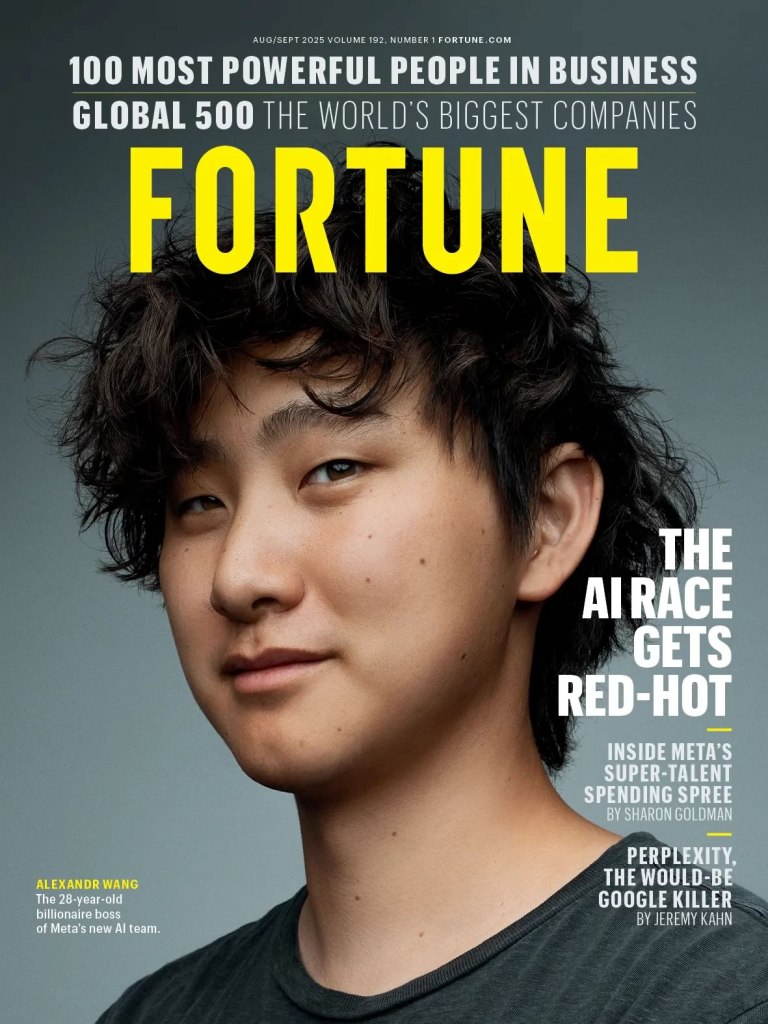
Close-up portrait of a young Asian man with dark hair, wearing a black shirt, featured on the cover of Fortune magazine's August/September 2025 issue, highlighting the 100 most powerful people in business.

“The Fortune Global 500 showcases the fascinating changes and significant shifts occurring in the global business landscape each year,” said Fortune CEO Anastasia Nyrkovskaya. “It highlights the stories of the companies, products, and people that are propelling our world forward. We are excited to share this global list, now in its 36th year, with audiences that value its authority and credibility.”

In her foreword for the August/September 2025 issue, Alyson Shontell, Fortune’s Editor in Chief and Chief Content Officer, stated, “We have tracked the Fortune 500 and Fortune Global 500—the world’s largest companies by revenue—for decades.” She summarized this by saying, “Our latest Global 500, which reflects 2024 performance, is more than just a ranking. It represents the calm before the storm in a profound geopolitical shift driven by AI, ongoing conflicts, and tariff uncertainties, all of which are reshaping the landscape for the world’s largest companies.”

Companies are ranked on the Fortune Global 500 based on their total revenues for fiscal years that end on or before March 31, 2025. To be included in the list, all companies must publish financial data and report part or all of their figures to a government agency. The most recent statistics in the list are those reported by the companies themselves, and any comparisons are made with the figures from the previous year as reported initially. Fortune does not adjust last year’s figures to account for any changes in accounting.

Fortune is a global multi-platform media company known for its trusted and award-winning reporting and information, aimed at individuals seeking to improve business practices. As an independently owned entity, Fortune shares stories about the world’s largest companies and their leaders, as well as a new generation of innovators driving business progress.

Both digitally and in print, Fortune evaluates corporate performance using rigorous benchmarks, holding companies accountable across various regions worldwide. Its renowned rankings include the Fortune 500, Fortune Global 500, Most Powerful Women, and World’s Most Admired Companies.

Fortune also fosters exceptional communities by bringing together industry thought leaders for exclusive summits and conferences, such as the Fortune Global Forum, Brainstorm Tech, and Fortune Most Powerful Women.

Source: Fortune Media (USA) Corporation

Global Tiger Day 2025: Celebrating Wildlife Conservation in India

New Delhi, India, July 29, 205 — Union Minister for Environment, Forest and Climate Change, Bhupender Yadav, presided over the celebrations of Global Tiger Day 2025, which were held today at the National Zoological Park in New Delhi.

July 29, celebrated as International Tiger Day, is much more than just a date on the calendar — it is a poignant moment for reflection and appreciation of one of nature’s most awe-inspiring creations. On this day, we honor the majestic tiger, a symbol of strength and grace, known for its fierce spirit and unyielding freedom. Happy International Tiger Day! Let us come together to champion the wild and protect the beautiful habitats that these incredible creatures call home.

During the event, the Minister highlighted the importance of maintaining ecological balance and fostering conservation awareness among children and expressed gratitude towards nature. Shri Yadav praised schools and teachers for their efforts in educating young minds about wildlife conservation and the preservation of biodiversity.

He emphasized the government’s dedication to wildlife conservation, stating, “Under the leadership of Prime Minister Shri Narendra Modi, the number of tiger reserves in India has grown from 46 in 2014 to 58 today. This increase demonstrates the Prime Minister’s strong commitment to protecting our national animal.”

The Minister announced the launch of a nationwide tree plantation drive, during which over 100,000 saplings will be planted across all 58 tiger reserves, making it one of the most extensive campaigns of its kind in the world.

Mr. Yadav also highlighted the International Big Cat Alliance (IBCA), initiated by India, which aims to protect the seven big cat species found globally. He mentioned that 24 countries have already agreed to join this global initiative, with the IBCA headquarters to be established in India.

A notable feature of the 2025 celebrations was the Eco-Shop Exhibition, which showcased eco-shops from various Tiger Reserves throughout the country. The exhibition included stalls offering a diverse range of community-based sustainable products and eco-development items sourced from the Western Ghats and Southern landscapes. These products exemplify a harmonious blend of cultural heritage and ecological responsibility.

The Minister also unveiled four important publications that each highlight a unique aspect of India’s wildlife conservation efforts under the National Tiger Conservation Authority (NTCA):

  1. A report titled “Status of Small Cats in the Tiger Landscape of India.”
  2. STRIPES Magazine – a special edition for Global Tiger Day.
  3. A book titled “Waterfalls of Tiger Reserves in India.”
  4. A book titled “Water Bodies Inside Tiger Reserves of India.”

The celebrations for Global Tiger Day 2025 highlight India’s enduring commitment to tiger conservation. They showcase a unified approach that combines grassroots involvement with policy-level strategies. It reflects an understanding that ecological integrity, community well-being, and international cooperation are vital for ensuring the long-term survival of tigers in the wild.

Source: Ministry of Environment, Forest and Climate Change, Government of India

Divya Deshmukh Crowned FIDE Women’s World Chess Champion 2025

Prime Minister Modi congratulates Divya Deshmukh on becoming the FIDE (International Chess Federation) Women’s World Chess Champion in 2025.

New Delhi, India, July 28, 2025 — The Prime Minister, Narendra Modi, congratulated Divya Deshmukh on becoming the FIDE (International Chess Federation) Women’s World Chess Champion 2025. “Koneru Humpy also displayed immense skill throughout the championship. Best wishes to both players in their future endeavors,” Mr. Modi stated.

Divya Deshmukh achieved a historic victory by defeating Koneru Humpy in a thrilling all-Indian final at the FIDE Women’s Chess World Cup, making her the first Indian champion of this prestigious tournament. The championship took place in the picturesque city of Batumi, Georgia, where Divya showcased her exceptional skill and determination.

After two intense days of classical chess, where both players fought valiantly but ended in draws, the fate of the championship was decided in an electrifying tie-breaker round. In the first rapid tie-breaker, both competitors fought hard, resulting in another draw. However, in the second rapid tie-breaker, Divya displayed remarkable composure and strategic brilliance, ultimately triumphing over Humpy with the black pieces.

This impressive victory not only grants Divya the esteemed title of ‘Grandmaster’ but also secures her a spot in the highly competitive Candidates tournament, propelling her further into the elite ranks of the chess world.

Humpy is one of the most accomplished and compact players in the world of chess. For over two decades, she has been a prominent representative of Indian women’s chess. Her achievements include numerous titles, such as two World Rapid Championships and two gold medals from the Asian Games. Additionally, she has been a vital member of the team that won gold at the Chess Olympiad.

The all-Indian final was a remarkable showcase of India’s impressive growth in sports, highlighting the incredible talent the country has nurtured. The fact that the match extended to a tie-breaker serves as a testament to the fierce competition and skill present among the players, underscoring the rich depth of talent that India has produced over the years.


WIPO Awards 2025: Recognizing Global Innovators in Intellectual Property

  • World Intellectual Property Organization (WIPO) Announces the Winners of the 2025 Global Awards: Celebrating Innovation and Impact Driven by Intellectual Property.

Geneva, Switzerland, July 24, 2025 — This year, ten small and medium-sized enterprises (SMEs), startups, and university spinoffs have won the WIPO Global Awards. Their innovative products include antibody therapeutics, sign-to-speech gloves, next-generation memory chips, and sustainable protein fermentation. These breakthroughs demonstrate the transformative power of intellectual property (IP) in enhancing lives, advancing technology, and fostering more sustainable communities.

Now in its fourth edition, the WIPO Global Awards recognize visionary entrepreneurs who utilize intellectual property (IP) to drive business growth while making substantial social and economic contributions. The winners this year include a diverse range of innovators addressing global challenges in health, the environment, agri-food, creative industries, and information and communications technology (ICT).

The ten winning SMEs, university spinouts, and startups were selected from over 780 applicants across 95 countries, highlighting the program’s global reach.

“This year’s awards emphasize the importance of intellectual property (IP) in addressing real-world challenges and creating new opportunities. The winners demonstrate how effectively leveraging IP can drive growth, inspire creativity, and provide solutions that benefit people globally. I extend my congratulations to them and look forward to witnessing how they continue to thrive, using IP as a crucial partner on their journey to market.”

— WIPO Director General Daren Tang

The awards were presented during a ceremony held at the WIPO headquarters in Geneva on July 11, 2025, as part of the WIPO Assemblies of Member States. During the event, the winners expressed their intentions to utilize WIPO’s support to enhance their intellectual property strategies, attract investments, and access new markets.

The winners of the WIPO Global Awards enjoy a range of benefits aimed at promoting their growth:

  • Personalized one-on-one mentoring to facilitate IP commercialization, including guidance on fundraising and business development.
  • Enhanced global visibility through WIPO platforms and partner networks.
  • Ongoing access to WIPO resources and advisory services for effective IP management.
  • Full sponsorship to attend the Awards Ceremony and related networking events in Geneva.

The 2025 WIPO Global Awards Winners

  • Health:

SME: Hummingbird Bio, Singapore, antibody therapeutics
Startup: Glovatrix, India, sign-to-speech gloves

  • Environment:

SME: Carbfix, Iceland, CO₂ mineral storage
Startup: Urban Inventors, Sri Lanka, anti-flood drain system

  • Agri-food:

SME: PhageLab, Chile, antibiotic alternatives for livestock farming
Startup: Planetary, Switzerland, mycoprotein fermentation tech

  • Creative industries:

SME: ClicknClear, United Kingdom, music rights licensing
Startup: CodeGream, Republic of Korea, 3D product showcase

  • ICT (Information and Communications Technology):

SME: Unitree Robotics, China, advanced robotics
Startup: Quinas Technology, United Kingdom, next-gen memory chips

In a bid to further champion diversity and inclusion in innovation, the 2025 edition introduced two new special recognitions for award winners, unlocking supplementary benefits:

  • Best Woman Entrepreneur 2025 – This award is presented to Edda Aradóttir, CEO of Carbfix (Iceland). It recognizes her visionary leadership and commitment to diversity, as well as her company’s effective use of intellectual property. The award is sponsored by She Loves Tech, a global accelerator for women-led startups. It includes mentorship from their CEO, as well as a speaking opportunity at their international conference.
  • Best Youth Entrepreneur 2025 – awarded to Aishwarya Karnataki, CEO of Glovatrix (India). This recognition celebrates a young entrepreneur (under 35) whose purpose-driven leadership inspires others beyond her invention. Support is provided by YE! at the International Trade Centre, a global platform for young entrepreneurs, which includes tailored access to their network and enhanced international visibility.

The Global Awards program is fundamentally aligned with WIPO’s mission to cultivate a global environment where intellectual property rights drive innovation and creativity for the benefit of all stakeholders. These independent awards, conferred by a jury of experts, aim to recognize and support individuals whose competencies contribute to societal advancement and improve the quality of life for communities. Recipients of the award will receive a tailored mentorship program designed to help them utilize intellectual property to foster business growth, as well as exclusive resources to enhance their access to funding and business opportunities.

  • The World Intellectual Property Organization (WIPO) is a specialized agency of the United Nations that plays a critical role in supporting global innovators and creators. It ensures that their intellectual property rights are protected, facilitating the safe transition of their ideas to the marketplace and contributing to the enhancement of lives around the world.

Source: The World Intellectual Property Organization (WIPO)

— The Author is an alumnus of the WIPO Academy, Geneva, Switzerland.

UNESCO Director General Responds to US Withdrawal

  • Audrey Azoulay, the Director-General of UNESCO, released a statement regarding the United States’ withdrawal from UNESCO.

Paris, July 22, 2025 — Audrey Azoulay, Director-General of UNESCO, has issued the following statement regarding the withdrawal of the United States from UNESCO:

“I deeply regret President Donald Trump’s decision to withdraw the United States from UNESCO once again—a decision that will take effect at the end of December 2026.

“This choice contradicts the fundamental principles of multilateralism. It may primarily affect our many partners in the United States—communities seeking site inscription on the World Heritage List, Creative City status, and University Chairs.

“While this announcement is regrettable, it was anticipated, and UNESCO has prepared for it.

“In recent years, we have implemented significant structural reforms and diversified our funding sources. Thanks to the efforts made by the Organization since 2018, the decline in U.S. financial contributions has been offset, now representing 8% of the Organization’s total budget compared to 40% for some other United Nations entities. At the same time, UNESCO’s overall budget has steadily increased. Today, the Organization is better protected financially, with the steady support of numerous Member States and private contributors, whose voluntary contributions have doubled since 2018.

“At this stage, the Organization is not considering any layoffs.

“Despite President Trump’s initial withdrawal in 2017, UNESCO has intensified its efforts to contribute to peace and has demonstrated the essential nature of its mandate.

“The Organization completed the largest operation in its history with the reconstruction of the old city of Mosul, which began in 2018. It also adopted the first and only global standard-setting instrument on the ethics of artificial intelligence. It developed major programs to support culture and education in conflict settings, including those in Ukraine, Lebanon, and Yemen. Furthermore, it has intensified its efforts in biodiversity conservation, natural heritage preservation, and girls’ education.

“The reasons cited by the United States for withdrawing from the Organization are the same as those put forth seven years ago, despite the profound changes that have occurred since then. Political tensions have receded, and UNESCO today serves as a rare forum for consensus on concrete and action-oriented multilateralism.

“These claims also contradict the reality of UNESCO’s efforts, especially in the realm of Holocaust education and the fight against antisemitism.

“UNESCO is the only United Nations agency responsible for these issues, and its work has received unanimous acclaim from major specialized organizations, including the United States Holocaust Memorial Museum in Washington, D.C., the World Jewish Congress, its American Section, and the American Jewish Committee (AJC). UNESCO has assisted 85 countries in implementing tools and training teachers to educate students about the Holocaust and genocides, while combating Holocaust denial and hate speech.

“UNESCO will continue to carry out these missions, despite the inevitable reduction in resources.

“The purpose of UNESCO is to welcome all nations of the world, and the United States will always be welcome.

“We will continue to work closely with all our American partners in the private sector, academia, and non-profit organizations, and we will pursue political dialogue with the U.S. administration and Congress.”


  • The United Nations Educational, Scientific, and Cultural Organization (UNESCO), comprising 194 Member States, plays a crucial role in fostering peace and security around the globe. It achieves this by spearheading multilateral cooperation in various enriching fields, including education, science, culture, communication, and information.
  • With its headquarters located in the vibrant city of Paris, UNESCO extends its impact through offices in 54 countries, employing a dedicated workforce of over 2,300 professionals from diverse backgrounds. This Organization is entrusted with the stewardship of more than 2,000 prestigious World Heritage sites, breathtaking Biosphere Reserves, and distinct Global Geoparks, preserving the world’s cultural and natural heritage for future generations.
  • UNESCO also cultivates networks of Creative, Learning, Inclusive, and Sustainable Cities, promoting holistic urban development. Additionally, it supports a vast educational ecosystem, encompassing over 13,000 affiliated schools, esteemed university chairs, and numerous training and research institutions. Two hundred national commissions worldwide further strengthen this extensive network, each playing a vital role in fulfilling UNESCO’s mission. Leading these efforts is the current Director-General, Audrey Azoulay, whose vision guides the Organization in its commitment to fostering a more educated, culturally rich, and sustainable world.

Source: UNESCO

IMF’s Gita Gopinath Returns to Harvard as Economics Professor

Gita Gopinath, the First Deputy Managing Director, will leave the IMF to return to the Harvard Faculty of Economics.

Washington, DC, July 22, 2025 — Kristalina Georgieva, Managing Director of the International Monetary Fund (IMF), announced today that Gita Gopinath, First Deputy Managing Director, will leave the Fund at the end of August to return to Harvard University. There, she will assume the role of inaugural Gregory and Ania Coffey Professor of Economics in the Department of Economics. Ms. Gopinath joined the IMF in January 2019 as Chief Economist and was promoted to First Deputy Managing Director in January 2022.

In making the announcement, Ms. Georgieva stated, “Gita has been an outstanding colleague—an exceptional intellectual leader, dedicated to the mission and members of the Fund, and an excellent manager who genuinely cares about the professional growth and well-being of our staff. She joined the Fund as a highly respected academic in the fields of macroeconomics and international finance. Admiration for Gita only increased throughout her time at the Fund, where her analytical rigor was complemented by practical policy advice offered to our members during a particularly challenging period marked by the pandemic, wars, the cost-of-living crisis, and significant shifts in the global trading system.”

Ms. Georgieva stated: “Gita led the Fund’s analytical and policy initiatives with clarity, aiming for the highest standards of rigorous analysis during a complex period marked by high uncertainty and a rapidly changing global economic environment. She managed the Fund’s multilateral surveillance and analytical work related to fiscal and monetary policy, debt, and international trade. Gita made significant contributions to systemic country surveillance and the Fund’s country programs, including those for Argentina and Ukraine. As a key member of my senior leadership team, Gita represented the Fund with integrity and strength in various international forums, notably the G-7 and G-20.”

She also mentioned that Ms. Gopinath—the first female Chief Economist in the history of the IMF—has a unique combination of brilliance and humility that we all admire. “As Chief Economist, Gita ensured that the World Economic Outlook remained the leading report on the global economy, an awe-inspiring achievement during the COVID-19 pandemic, which posed unprecedented challenges for our members. Gita also led the Fund’s work on the Integrated Policy Framework (IPF), providing a comprehensive analytical framework to help countries identify the appropriate policies for macroeconomic and financial stability. Additionally, she co-authored the Pandemic Plan, outlining strategies to end the COVID-19 crisis—a significant intellectual contribution widely recognized for addressing a crucial global need by setting achievable vaccination targets for the world.”

Upon her departure, Ms. Gopinath stated, “I am truly grateful for my time at the IMF, first as Chief Economist and then as First Deputy Managing Director. I have had the privilege of working closely with the IMF’s talented and dedicated staff, management colleagues, the Executive Board, and representatives from various countries. I want to extend my special thanks to Kristalina and her predecessor, Christine Lagarde, for the unique opportunity to serve the IMF’s membership during a period of unprecedented challenges. I now return to my academic roots, where I look forward to continuing to advance research in international finance and macroeconomics to address global challenges, as well as training the next generation of economists.”

Managing Director Georgieva will announce a successor to Ms. Gopinath in due course.

Source: International Monetary Fund (IMF)